Choosing a Domicile Canton for a New Swiss Company
A canton's headline corporate tax rate is rarely the rate you pay. Most multiply a base rate by a Steuerfuss set separately by canton, commune and year.
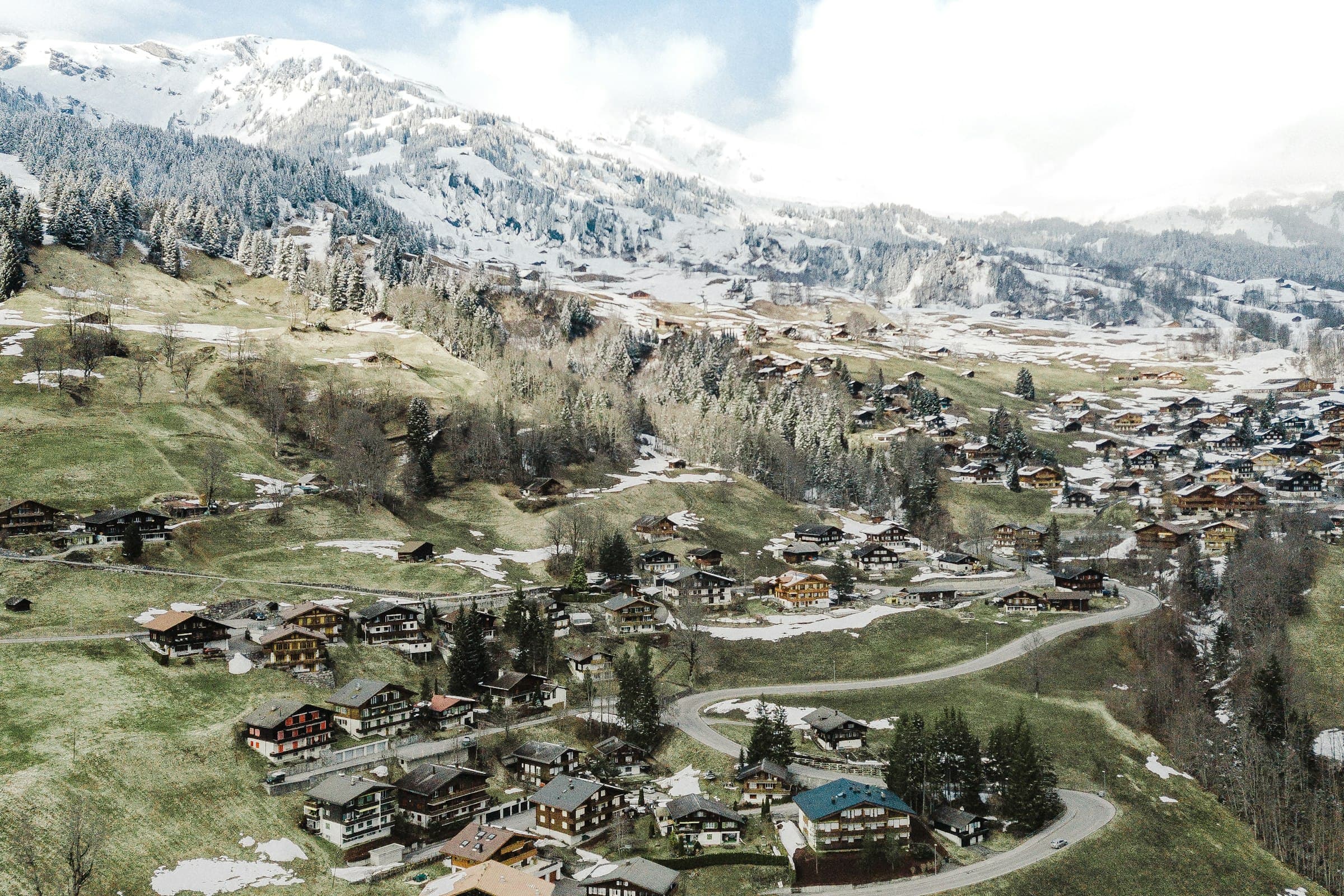
Published rankings of "the cheapest canton for a Swiss company" put a single percentage next to each canton's name, and founders read them as directly comparable. They aren't, and the reason is structural rather than a matter of which canton happens to be cheapest this year. In most cantons the rate in the law is only a starting point: a base rate that gets multiplied by a Steuerfuss the canton and the commune set separately, moving from year to year and from one commune to the next within the same canton. A handful of cantons instead fix one rate outright. A number quoted for a canton without naming the commune and the year is one snapshot of a moving target, and the two kinds of number are not the same kind of thing.
The federal layer is the same everywhere#
One part of the bill doesn't vary by canton at all. The direct federal tax on a capital company's net profit is a flat 8.5%, set by Art. 68 DBG and capped there by the federal constitution itself (Art. 128 Abs. 1 Bst. b BV), identical whether the company is domiciled in Stans, Zug, or Zurich. Whatever difference exists between cantons comes entirely from the cantonal and communal layer on top of that 8.5%, and only from that layer.
A canton with no multiplier at all#
Nidwalden is the clearest example of the fixed-rate structure. Its cantonal profit tax for a capital company is set directly in law at 5.1% of net profit (Art. 85 StG), and unlike most cantons it isn't multiplied by anything: the canton's own published 2026 table for cantonal capitals lists it as applying no Steuerfuss at either the cantonal or communal level. The 5.1% already covers canton, commune and church between them, split administratively rather than layered on top of each other. Capital tax follows the same fixed-rate logic: 0.1‰ of taxable equity, with a combined minimum annual tax of CHF 500 (Art. 98 StG).
The more common case: a rate that moves with the commune#
Zug and Zurich work the other way. Each sets a base rate in law (3.5% in Zug, § 66 StG; 7% in Zurich, § 71 StG, covering both cantons' capital companies), and that base rate is then multiplied separately by a cantonal Steuerfuss and by whatever the specific commune has set for itself. In Zug's own cantonal capital, the 2026 cantonal multiplier is 78%, cut from the 82% statutory default for the 2026-2029 period; Zug city's communal multiplier sits at 52.11%. In Zurich city, the cantonal multiplier is 95% and the communal multiplier is 119%, more than double Zug city's. Move the same company to a different commune within either canton and both multipliers change again.
A cut like Zug's 82%-to-78% reduction moves the headline number without a single word of the profit-tax rate itself changing: the base rate (3.5%) stayed exactly where it was in § 66 StG. Capital tax scales the same way: 0.5‰ of equity in Zug (§ 75 StG), 0.75‰ in Zurich (§ 82 StG).
The multiplier is also what makes a single published figure unreliable as a stand-in for a canton as a whole. Zug city's cantonal-and-communal layer, at its current 2026 settings, is 3.5% × (78% + 52.11%) = 4.55% of net profit; a different Zug commune with its own communal multiplier produces a different number entirely, and either can move again next year when the commune resets its Steuerfuss. Zurich city's works out to 7% × (95% + 119%) = 14.98%, and carries the same commune-by-commune variation. A fixed-rate canton carries none of that variation: the rate is the rate, every commune, every year, with no Steuerfuss to reset.
None of which settles where a given company should actually be domiciled. Tax is one input, and for most operating businesses not the decisive one: proximity to banks, counsel and staff, the credibility the address carries with counterparties, and where the work is genuinely done all bear on it, and a domicile chosen purely on a rate table tends to create substance questions later. These figures are also before the federal 8.5% (identical everywhere) and before the standard self-deduction adjustment a proper year-end calculation applies, so treat them as the shape of the comparison, not a final invoice. The shape is enough to say that a canton-name-only comparison, without the specific commune and year behind it, isn't a comparison at all. It's worth resolving before incorporating, not after the Commercial Register filing.
Frequently asked
01Does the federal 8.5% profit tax change depending on which canton a company is domiciled in?
No. It's a flat rate under Art. 68 DBG that applies identically regardless of canton or commune. Everything that varies by canton comes from the cantonal and communal layer on top of it.
02Are two cantons' headline corporate tax rates directly comparable?
Often not. Some cantons set one fixed rate in law; most set a base rate that is then multiplied by a cantonal and a communal Steuerfuss, so the actual rate differs by commune and can change from one year to the next. A figure quoted for a canton without naming the commune and the year isn't a like-for-like comparison to a canton whose rate is fixed.
03How often do these multipliers change?
Cantonal multipliers are typically set for multi-year periods (Zug's runs 2026-2029) or reviewed annually depending on the canton, and communal multipliers are usually reset every year by the commune itself, separately from the canton's own decision.
04Does this comparison apply to a non-profit association or foundation instead of an AG or GmbH?
No, this piece covers capital companies (AG/GmbH) specifically. Associations, foundations, and other legal entities are taxed under separate provisions in each canton's law, at different rates.
Sources
Information verified as of 13 August 2026.
- Flat federal direct tax rate on the net profit of capital companies and cooperatives
- Zug canton's and Zug city's 2026 profit-tax multipliers applied to the base rate
- Zurich canton's and Zurich city's 2026 profit-tax multipliers applied to the base rate
estv2.admin.ch, verified 13 August 2026
- Nidwalden's cantonal profit tax for capital companies combines canton, commune and church into one fixed rate with no multiplier applied
- Nidwalden's capital tax rate for capital companies
estv2.admin.ch, verified 13 August 2026
- Zug's base cantonal profit tax rate for capital companies, before the Steuerfuss multiplier
- Zug's capital tax rate for capital companies
estv2.admin.ch, verified 13 August 2026
- Zurich's base cantonal profit tax rate for capital companies, before the Steuerfuss multiplier
- Zurich's capital tax rate for capital companies
estv2.admin.ch, verified 13 August 2026
The content on this website is provided for general information purposes only and is general in nature. It does not constitute legal, tax or financial advice and is not a substitute for individual advice in a specific case. No warranty is given as to the accuracy, completeness or currency of the information, and any liability is excluded to the extent permitted by law. Use of this website or contacting us does not create any client, mandate or advisory relationship. For your specific situation we recommend obtaining individual advice from a qualified professional.
Related reading
AG vs GmbH: Choosing the Right Structure
How a Swiss AG and GmbH actually differ: share capital, what gets published in the Commercial Register, and which one fits a foreign-owned company better.
Read article
Setting Up a GmbH in Switzerland
A practical guide to forming a Swiss GmbH: the share capital rule, what incorporation involves, the registration timeline and audit thresholds that follow.
Read article
Swiss Holding Company Basics
What a Swiss holding company actually is today, how the participation exemption works since the 2020 tax reform, and what it takes to set one up.
Read article