
Swiss Legal Entities: Key Choices for Entrepreneurs
- Dec 7, 2025
- 7 min read

For many American entrepreneurs, Switzerland stands out as a hub of financial stability and sophisticated business structures. With more than 400 multinational companies choosing Switzerland as their European headquarters, the need to understand Swiss legal entities has never been greater. Knowing the differences between AG and GmbH formations helps American businesses navigate the precise regulatory environment and unlock new opportunities in this competitive market.
Table of Contents
Key Takeaways
Point | Details |
Diverse Legal Structures | Switzerland offers various legal entities, primarily the Aktiengesellschaft (AG) and Gesellschaft mit beschränkter Haftung (GmbH), catering to different business needs and sizes. |
Corporate Governance | Swiss corporate governance emphasizes transparency and accountability, ensuring robust operational frameworks that attract international entrepreneurs. |
Compliance Requirements | Entrepreneurs must adhere to strict compliance protocols, including registration, reporting, and financial auditing, to maintain legal integrity in Switzerland. |
Risk Management and Taxation | Understanding liability protections and navigating competitive tax structures are essential for business owners to optimize financial exposure and compliance. |
Defining Swiss Legal Entities and Core Concepts
Switzerland offers entrepreneurs a sophisticated landscape of legal business structures designed to accommodate diverse operational needs and strategic goals. Understanding these legal entities is critical for international businesses seeking to establish a robust presence in one of Europe’s most financially stable markets. The Swiss legal framework provides multiple corporate structures, each with unique characteristics tailored to different business models and investment strategies.
Primary Swiss legal entities include the Aktiengesellschaft (AG) and the Gesellschaft mit beschränkter Haftung (GmbH), which represent the most common corporate formations for international entrepreneurs. The AG functions similarly to a public limited company, requiring a minimum capital investment and offering shareholders limited liability protection. Conversely, the Swiss GmbH provides a more flexible framework for smaller enterprises, with lower initial capital requirements and streamlined administrative processes.
The Official Compilation of Federal Legislation serves as the authoritative source governing these legal structures, ensuring transparent and standardized regulations across Swiss corporate landscapes. Each legal entity must adhere to specific registration protocols, reporting requirements, and governance standards. Entrepreneurs must carefully evaluate their business objectives, scale of operations, and long-term growth strategies when selecting an appropriate legal structure in Switzerland.
Key considerations for choosing a Swiss legal entity include capital requirements, shareholder complexity, tax implications, and operational flexibility. While AGs typically attract larger corporations and international investors, GmbHs offer an accessible entry point for small to medium-sized enterprises seeking a robust yet adaptable business framework. Regardless of the chosen structure, Switzerland’s commitment to legal precision and economic stability makes it an attractive destination for global business expansion.
Exploring Types: AG, GmbH, and More
Switzerland’s corporate landscape offers entrepreneurs multiple sophisticated legal structures, each designed to meet specific business requirements and strategic objectives. The two primary legal entities - Aktiengesellschaft (AG) and Gesellschaft mit beschränkter Haftung (GmbH) - represent the most prevalent corporate formations, each with distinctive characteristics that cater to different business scales and operational complexities.
The Aktiengesellschaft (AG) represents a public limited company structure, typically preferred by larger corporations and international investors seeking robust corporate governance. These entities require a minimum initial capital investment and offer shareholders comprehensive liability protection. In contrast, the GmbH provides a more flexible framework for smaller enterprises, featuring lower capital requirements and streamlined administrative processes.

Corporate tax structures and financial incentives make Swiss legal entities particularly attractive for international businesses. Beyond AG and GmbH, entrepreneurs can also explore additional structures like sole proprietorships, partnerships, and branch offices, each offering unique advantages depending on business goals, investment scale, and operational complexity.
Beyond traditional structures, Switzerland also supports specialized entities such as holding companies, which provide exceptional tax optimization opportunities, and branch offices that allow foreign corporations to establish a legal presence without creating an entirely new corporate entity. The country’s commitment to transparent regulations, economic stability, and business-friendly policies makes these legal structures exceptionally appealing for global entrepreneurs seeking a strategic European business foothold.
Key Features and Governance Structures Explained
Switzerland’s corporate legal framework provides sophisticated governance mechanisms that distinguish its business entities from traditional international models. Corporate governance in Swiss legal structures emphasizes transparency, accountability, and strategic flexibility, creating an environment that attracts global entrepreneurs seeking robust and reliable business frameworks.
Share capital requirements and ownership transfer mechanisms represent critical aspects of Swiss corporate structures. In an AG, shareholders enjoy limited liability while maintaining the ability to transfer ownership seamlessly, which provides significant operational advantages. The GmbH structure offers similar protections but with more flexible administrative requirements, allowing smaller enterprises to establish sophisticated corporate governance models without extensive bureaucratic overhead.
The governance structures typically involve key administrative roles including shareholders, directors, and management boards. Each role carries specific legal responsibilities and decision-making powers. Shareholders determine strategic direction, directors implement corporate policies, and management executes day-to-day operations. This multi-tiered approach ensures comprehensive oversight and prevents concentration of power in any single organizational level.
Additionally, Swiss legal entities must comply with stringent reporting and financial transparency requirements. Annual financial statements, independent audits, and detailed corporate records are mandatory, creating a high-trust environment that appeals to international investors. These governance mechanisms not only protect stakeholder interests but also position Swiss corporate structures as some of the most credible and professionally managed business entities in the global marketplace.
Swiss Legal Requirements and Compliance Steps
Navigating the intricate landscape of Swiss business regulations demands a comprehensive understanding of legal compliance protocols that govern corporate establishment and operations. International entrepreneurs must meticulously adhere to a complex framework of national and cantonal regulations designed to ensure transparency, financial integrity, and sustainable business practices.
The Official Compilation of Federal Legislation provides the authoritative foundation for understanding Switzerland’s comprehensive legal requirements, outlining the precise steps businesses must follow during incorporation and ongoing operations. Key compliance steps include formal company registration, obtaining necessary business licenses, maintaining rigorous accounting standards, and fulfilling annual reporting obligations.
Company formation requires entrepreneurs to complete several critical compliance steps, which typically involve:
Selecting an appropriate legal entity structure
Preparing and notarizing foundational corporate documents
Depositing minimum required share capital
Registering with local commercial registers
Obtaining tax identification numbers
Establishing compliant corporate bank accounts
Beyond initial registration, Swiss legal entities must maintain ongoing compliance through annual financial audits, timely tax submissions, and transparent corporate governance. The stringent regulatory environment ensures that businesses operate with the highest standards of financial accountability, making Switzerland an attractive destination for serious international entrepreneurs seeking a stable and credible business jurisdiction.
Liability, Taxation, and Risk Factors for Owners
Understanding the intricate balance of liability protection and financial risk is crucial for entrepreneurs considering Swiss corporate structures. Each legal entity offers unique mechanisms for managing personal financial exposure, with different implications for owners’ personal assets and potential legal responsibilities.
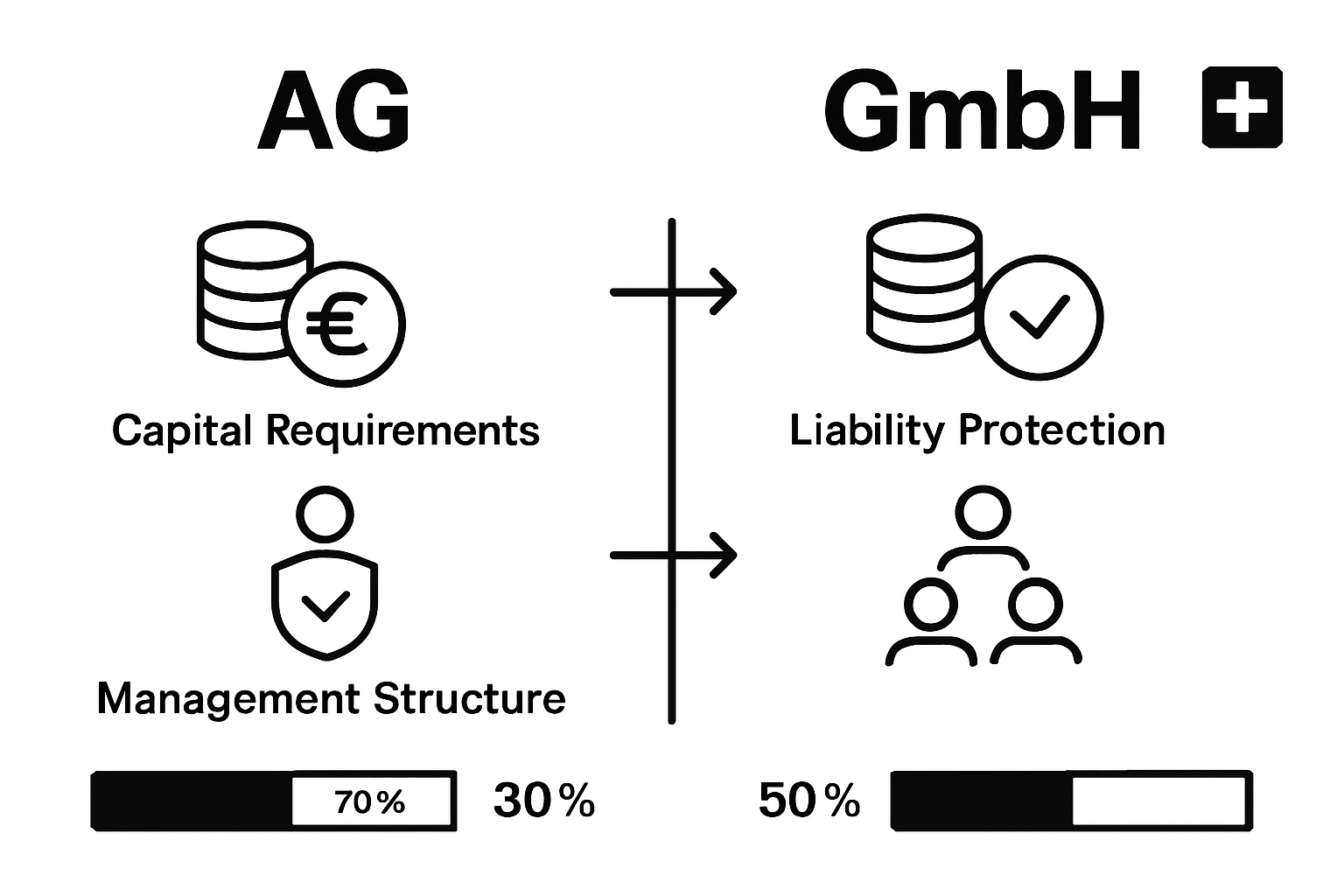
Corporate tax structures and financial benefits represent critical considerations for business owners evaluating Swiss legal entities. The AG structure provides robust shareholder liability protection, limiting individual risk to invested capital, while GmbH offers more flexible ownership models with reduced minimum capital requirements. This nuanced approach allows entrepreneurs to strategically manage their financial risk exposure.
Key risk mitigation strategies for Swiss business owners include:
Maintaining clear separation between personal and corporate assets
Implementing comprehensive corporate insurance coverage
Establishing robust internal financial control mechanisms
Conducting regular financial and legal compliance audits
Maintaining transparent accounting practices
Developing comprehensive risk management protocols
Taxation presents another critical dimension of risk management. Swiss corporate tax rates are competitive, with cantonal variations offering potential optimization strategies. Owners must navigate complex regulations surrounding corporate income tax, withholding tax, and potential international tax treaties, making professional financial guidance essential for minimizing tax liabilities while maintaining full legal compliance.
Simplify Your Swiss Company Formation with Expert Guidance
Choosing the right Swiss legal entity like an AG or GmbH can be complex. You must weigh factors such as liability protection, capital requirements, and governance while ensuring full legal compliance. International entrepreneurs face additional challenges navigating Switzerland’s stringent incorporation procedures and ongoing administrative obligations without local knowledge.
Trust RPCS to streamline your company formation journey in Switzerland. Our expert services cover everything from notarizing documents and registration to banking setup and ongoing administration. With rapid setup times and confidential support tailored for international clients, you gain the confidence and clarity needed to establish your business efficiently in this stable, investor-friendly jurisdiction.
Start building your Swiss business foundation today by visiting RPCS. Access comprehensive guidance on setting up your AG or GmbH and benefit from our full suite of legal, accounting, and risk management services designed to protect and grow your enterprise.
Frequently Asked Questions
What are the primary legal entities available for entrepreneurs in Switzerland?
The two primary legal entities for entrepreneurs in Switzerland are the Aktiengesellschaft (AG), which is a public limited company, and the Gesellschaft mit beschränkter Haftung (GmbH), which is a limited liability company. Each has unique characteristics that cater to different business needs.
What are the key considerations when choosing a legal entity in Switzerland?
Key considerations include capital requirements, shareholder complexity, tax implications, and operational flexibility. Entrepreneurs should align their choice with their business objectives and growth strategies.
How does liability protection work for business owners in Swiss legal entities?
In Swiss legal entities, both the AG and GmbH structures offer limited liability protection, meaning that owners risk only their invested capital and their personal assets are generally protected from company debts.
What are the compliance steps required for setting up a business in Switzerland?
Setting up a business involves several compliance steps, including selecting a legal entity, preparing corporate documents, depositing minimum share capital, registering with local authorities, and obtaining necessary licenses and tax identification numbers.
Recommended
Comments