
Ongoing Administration for Swiss Companies: Key Challenges
- Feb 12
- 9 min read
Updated: Feb 18

Opening a Swiss GmbH or AG can feel overwhelming when faced with the country’s intricate administrative and legal requirements. International entrepreneurs and foreign investors quickly discover that Switzerland’s multi-level regulatory system demands more than routine paperwork. This guide breaks down the essentials of ongoing administration, helping you protect your investment with clear strategies for compliance, governance, and risk management in one of Europe’s most sophisticated business environments.
Table of Contents
Key Takeaways
Point | Details |
Ongoing Administration | Swiss companies must manage complex compliance and operational tasks, emphasizing strategic governance and adherence to regulatory frameworks. |
GmbH vs AG Differences | The administrative requirements vary between GmbH and AG structures, impacting capital requirements, governance, and reporting obligations. |
Role of Directors | Swiss directors must ensure legal compliance, implement effective governance, and protect shareholder interests, bearing personal liability for compliance failures. |
Compliance Risks | Non-compliance can lead to significant penalties; proactive risk management and regular audits are essential to mitigate these risks. |
Defining Ongoing Administration in Switzerland
Ongoing administration for Swiss companies represents a complex, multifaceted management process that extends far beyond simple record-keeping. It encompasses a comprehensive approach to maintaining corporate compliance, governance, and operational effectiveness within Switzerland’s intricate regulatory landscape. The process integrates strategic management with legal requirements unique to the Swiss business environment.
The core components of ongoing administration involve several critical activities:
Financial Reporting: Preparing and submitting accurate financial statements
Regulatory Compliance: Ensuring adherence to Swiss corporate laws
Tax Management: Managing tax obligations across federal and cantonal levels
Corporate Governance: Maintaining proper corporate records and documentation
Statutory Requirements: Meeting annual filing and reporting mandates
Switzerland’s administrative system reflects a sophisticated approach to corporate management, characterized by multi-level administrative practices. The approach emphasizes transparency, efficiency, and rigorous performance standards. Companies must navigate a complex framework that involves federal, cantonal, and municipal regulatory requirements, each with distinct administrative responsibilities.
Swiss ongoing administration demands meticulous attention to detail and a comprehensive understanding of the country’s unique regulatory environment.
The administrative process goes beyond mere compliance, integrating strategic planning and results-oriented management principles. Companies must adapt to evolving regulatory landscapes while maintaining high standards of operational excellence. This requires not just technical expertise, but also a nuanced understanding of Switzerland’s administrative culture and legal frameworks.
Pro tip: Engage local Swiss administrative professionals or consultants who understand the intricate regulatory nuances to streamline your ongoing administrative processes and ensure full compliance.
Comparing GmbH and AG Administrative Duties
The administrative requirements for Swiss companies differ significantly between the Gesellschaft mit beschränkter Haftung (GmbH) and the Aktiengesellschaft (AG), representing two distinct corporate structures with unique operational and legal obligations. Comparative legal frameworks reveal nuanced differences that impact governance, reporting, and organizational complexity.
Key administrative distinctions between GmbH and AG include:
Capital Requirements:
GmbH: Minimum CHF 20,000 fully paid-in capital
AG: Minimum CHF 100,000 with at least CHF 50,000 paid-in
Governance Structure:
GmbH: More flexible management approach
AG: Mandatory board of directors with stricter oversight
Reporting Obligations:
GmbH: Limited public disclosure requirements
AG: Comprehensive regulatory and financial reporting
The administrative complexity varies substantially between these two corporate forms. AGs typically require more formal corporate governance processes, including mandatory annual general meetings (AGMs) and more rigorous shareholder protections. In contrast, GmbHs offer entrepreneurs a more streamlined administrative approach with fewer statutory formalities.

Here’s a concise comparison of core operational differences between Swiss GmbH and AG structures:
Category | GmbH (Limited Liability) | AG (Corporation) |
Minimum Paid-in Capital | CHF 20,000 | CHF 50,000 |
Board Structure | Flexible management | Mandatory board of directors |
Disclosure to Public | Minimal requirements | Extensive annual reporting |
Capital Market Access | Not permitted | Can list shares publicly |
Typical Use Case | SMEs, family businesses | Growth companies, large firms |
Administrative complexity increases with the AG structure, demanding more comprehensive compliance and governance mechanisms.
Access to capital markets presents another critical administrative differentiator. AGs enjoy greater financial flexibility, which necessitates more extensive regulatory reporting and transparency. This means AG administrators must maintain more detailed financial documentation and be prepared for more frequent and comprehensive audits compared to their GmbH counterparts.
Pro tip: Carefully evaluate your specific business needs and growth trajectory when selecting between GmbH and AG structures, as the administrative requirements can significantly impact long-term operational efficiency.
Role of Swiss Directors and Legal Compliance
Swiss corporate governance places extraordinary emphasis on directors’ legal responsibilities, demanding meticulous compliance and strategic oversight. Director legal mandates represent a complex framework of fiduciary duties and regulatory obligations that extend far beyond traditional management roles.
Key responsibilities of Swiss company directors include:
Legal Representation:
Ensuring proper Swiss legal representation
Maintaining compliance with national regulations
Corporate Governance:
Implementing robust internal control systems
Managing financial and operational risks
Regulatory Compliance:
Adhering to Swiss Code of Obligations
Filing accurate financial and tax documentation
Strategic Oversight:
Making decisions in the company’s best interest
Protecting shareholder value
The legal framework mandates that at least one board member or managing director must be a Swiss resident, creating a direct accountability mechanism. This requirement ensures that companies have local representation capable of navigating the intricate Swiss regulatory landscape and maintaining immediate responsiveness to legal and administrative requirements.
Directors bear personal liability for compliance failures, making their role critical in maintaining corporate integrity.
Companies must recognize that director responsibilities extend beyond mere administrative tasks. They are legally obligated to implement comprehensive risk management strategies, maintain transparent financial records, and ensure ongoing compliance with Swiss corporate regulations. This includes detailed reporting, accurate accounting practices, and proactive governance mechanisms that protect both the company and its stakeholders.
Pro tip: Engage local legal experts to conduct regular compliance audits and provide ongoing guidance on evolving Swiss corporate regulations to mitigate potential legal risks.
Accounting, Tax, and Banking Management Duties
Swiss companies face intricate accounting, tax, and banking management requirements that demand precision, strategic planning, and comprehensive understanding of complex regulatory frameworks. International entrepreneurs must navigate a sophisticated landscape of financial obligations that extend far beyond basic record-keeping and reporting.
Key financial management responsibilities include:
Accounting Requirements:
Maintaining accurate and detailed financial records
Preparing annual financial statements
Implementing Swiss accounting standards
Tax Management:
Calculating corporate income taxes
Managing cantonal and federal tax obligations
Preparing comprehensive tax declarations
Banking Management:
Establishing compliant business bank accounts
Managing financial transactions
Ensuring transparent financial reporting
Compliance Monitoring:
Regular financial audits
Risk management and financial controls
Documentation of financial activities
The Swiss financial ecosystem demands meticulous attention to detail, with strict regulations governing every aspect of corporate financial management. Companies must develop robust internal systems that can handle the nuanced reporting requirements across different administrative levels, ensuring complete transparency and legal compliance.
Financial management in Switzerland is not just about numbers—it’s about creating a transparent, accountable corporate ecosystem.
Foreign entrepreneurs must recognize that Swiss financial regulations are designed to create a stable, trustworthy business environment. This means investing significant resources in understanding local accounting practices, tax structures, and banking protocols. Successful financial management requires not just technical expertise, but also a deep appreciation of the Swiss approach to corporate financial transparency.
Pro tip: Engage specialized Swiss financial consultants who understand both international accounting standards and local regulatory nuances to optimize your financial management strategy.
Mandatory Recordkeeping and Reporting Requirements
Swiss corporate regulations impose stringent recordkeeping and reporting mandates that demand meticulous documentation and transparent financial management. Swiss accounting law requirements establish comprehensive guidelines that ensure corporate financial integrity and regulatory compliance.
Mandatory recordkeeping elements encompass:
Financial Documentation:
Balance sheet preparation
Income statement compilation
Detailed financial notes
Retention Requirements:
Minimum 10-year record preservation
Digital and physical documentation storage
Systematic archival processes
Reporting Standards:
Swiss GAAP FER compliance
IFRS reporting for larger entities
Comprehensive financial disclosures
Audit Preparation:
Regular internal financial reviews
Maintaining audit trail documentation
Transparent financial transaction records
The Swiss regulatory framework requires companies to maintain financial records that authentically reflect their true economic circumstances. This goes beyond simple bookkeeping, demanding a comprehensive approach that provides a holistic view of the company’s financial health and operational performance.
Recordkeeping in Switzerland is not a bureaucratic exercise, but a critical mechanism for ensuring corporate transparency and accountability.
International companies must understand that these requirements are not merely administrative formalities. They represent a sophisticated system designed to protect stakeholder interests, prevent financial misconduct, and maintain Switzerland’s reputation for financial reliability. Failure to comply can result in significant penalties and potential legal complications.
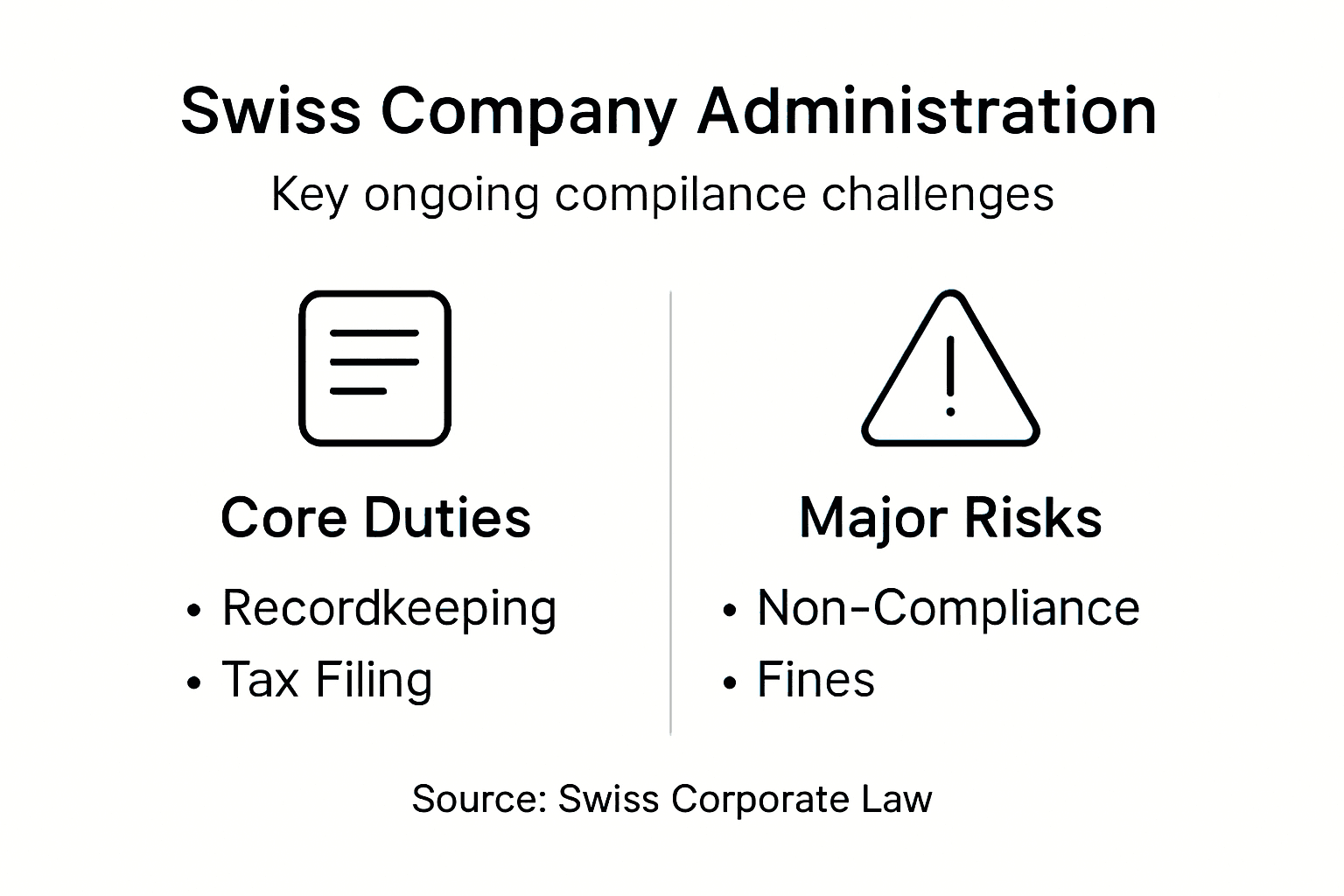
Pro tip: Implement a robust digital document management system that automatically categorizes and secures financial records to streamline compliance and reduce manual administrative overhead.
Common Pitfalls and Non-Compliance Risks
Navigating the intricate Swiss regulatory landscape requires exceptional diligence, as non-compliance risks can result in severe financial and legal consequences for international companies. Common compliance pitfalls underscore the critical importance of proactive risk management and comprehensive understanding of regulatory expectations.
Key non-compliance risks include:
Documentation Failures:
Incomplete customer records
Inadequate transaction documentation
Missing supporting financial evidence
Regulatory Reporting Gaps:
Missed filing deadlines
Inaccurate financial statements
Insufficient audit trail maintenance
Operational Compliance Issues:
Weak internal control systems
Insufficient staff training
Outdated compliance policies
Financial Monitoring Weaknesses:
Ineffective transaction screening
Lack of suspicious activity tracking
Poor risk assessment protocols
The potential consequences of non-compliance extend far beyond immediate financial penalties. Companies may face reputational damage, loss of business licenses, and potential legal action that can fundamentally undermine their operational capabilities in Switzerland.
This table summarizes frequent pitfalls and how to avoid compliance risks for Swiss companies:
Pitfall Type | Typical Example | Recommended Prevention |
Documentation Gaps | Missing transaction records | Use automated recordkeeping tools |
Regulatory Deadlines | Late filing of reports | Set alert reminders and calendar |
Internal Controls | Weak approval workflows | Conduct annual policy reviews |
Audit Preparedness | Incomplete audit trails | Schedule regular internal audits |
Compliance is not a checkbox exercise, but a continuous commitment to maintaining the highest standards of corporate integrity.
International businesses must recognize that Swiss regulatory bodies like FINMA maintain rigorous enforcement mechanisms. Penalties can range from substantial monetary fines to complete operational restrictions, making it essential to develop a comprehensive, proactive compliance strategy that anticipates and addresses potential regulatory challenges.
Pro tip: Conduct regular internal compliance audits and maintain a dynamic compliance management system that can quickly adapt to evolving regulatory requirements.
Simplify Your Ongoing Administration Challenges in Switzerland
Navigating the complex demands of Swiss ongoing administration can feel overwhelming. From strict regulatory compliance and detailed financial reporting to director responsibilities and recordkeeping mandates, international entrepreneurs face significant challenges that require expert guidance. Key pain points include managing multi-level regulatory requirements, understanding differences between GmbH and AG administrative duties, and avoiding costly compliance pitfalls that can threaten your business stability.
At RPCS, we understand these challenges and offer a comprehensive solution tailored for foreign investors and entrepreneurs. Our professional platform streamlines your Swiss company setup and ongoing management, covering everything from legal documentation and banking setup to accounting and risk management. With confidentiality and rapid processing at the core, we help you maintain full compliance while focusing on your business growth.
Let us handle the complexities so you can benefit from Switzerland’s stable and advantageous business environment.
Secure your company’s future today by partnering with experienced professionals who care about your success.
Take control of Swiss corporate compliance and administration now.
Start your journey with RPCS.
Improve your Swiss company management with expert support.
Discover how to minimize compliance risks.

Frequently Asked Questions
What is ongoing administration for Swiss companies?
Ongoing administration refers to the comprehensive process of managing corporate compliance, governance, and operational effectiveness within Switzerland’s regulatory landscape. It includes activities like financial reporting, regulatory compliance, tax management, and maintaining corporate governance.
What are the key differences between GmbH and AG administrative duties?
The primary differences between GmbH (limited liability) and AG (corporation) include capital requirements, governance structures, and reporting obligations. GmbHs have lower capital requirements and more flexible management, while AGs require a significant minimum capital and a mandatory board of directors with stricter oversight and reporting requirements.
What are the legal responsibilities of Swiss company directors?
Swiss company directors are responsible for legal representation, corporate governance, regulatory compliance, and strategic oversight. Their duties include ensuring compliance with national regulations, maintaining internal control systems, and protecting shareholder value.
What are common pitfalls that can lead to non-compliance in Swiss companies?
Common pitfalls include documentation failures, regulatory reporting gaps, weaknesses in internal controls, and ineffective financial monitoring. These issues can result in financial penalties, reputational damage, and legal consequences if not addressed proactively.
Recommended
Comments