
Swiss Corporate Compliance: Risks and Success Factors
- Jan 28
- 7 min read
Updated: Jan 30

Setting up a business in Switzerland means facing strict legal standards and high expectations for corporate trustworthiness. For international entrepreneurs and high-net-worth individuals, understanding the essentials of Swiss corporate compliance is the first step to protecting your company’s reputation and finances. This guide demystifies the core requirements for establishing AG or GmbH structures, giving you practical insights into legal obligations and tax advantages as you expand into the Swiss market.
Table of Contents
Key Takeaways
Point | Details |
Corporate Compliance Importance | Swiss corporate compliance is vital for maintaining legal and ethical standards, protecting financial interests, and fostering a culture of accountability. |
Corporate Structures Overview | Switzerland offers AG and GmbH structures, each with distinct characteristics suitable for different business sizes, requiring tailored compliance strategies. |
Incorporation Legal Requirements | Establishing a company in Switzerland involves detailed legal obligations, including capital requirements and governance framework compliance. |
Director Responsibilities and Risks | Directors in Switzerland face significant liabilities and must ensure robust compliance, with serious consequences for negligence in risk management and transparency. |
Swiss Corporate Compliance Essentials Explained
Corporate compliance in Switzerland represents a sophisticated framework designed to ensure businesses operate with the highest standards of legal and ethical integrity. Comprehensive compliance management requires organizations to develop robust systems that protect both their financial interests and professional reputation.
At its core, Swiss corporate compliance encompasses multiple critical dimensions. These include adhering to statutory regulations, implementing internal codes of conduct, managing potential risks, and establishing transparent communication channels. Companies must create structured compliance programs that go beyond mere legal requirements, focusing on cultivating a culture of ethical behavior and professional accountability. Swiss organizations typically develop multilayered compliance strategies that address legal, financial, operational, and reputational risks.
Key compliance elements for Swiss corporations include:
Comprehensive risk assessment protocols
Regular internal and external auditing procedures
Detailed documentation of corporate governance practices
Employee training programs on ethical standards
Transparent reporting mechanisms for potential violations
Proactive monitoring of regulatory changes
Pro tip: Invest in creating a comprehensive compliance manual that serves as a living document, regularly updated to reflect current regulatory landscapes and organizational changes.
Types of Swiss Corporate Structures: AG and GmbH
Switzerland offers two primary corporate structures for entrepreneurs: the Aktiengesellschaft (AG) and the Gesellschaft mit beschränkter Haftung (GmbH). Legal entities have unique characteristics that make them suitable for different business scales and operational requirements.

The Public Limited Company (AG) represents the most traditional corporate structure, ideal for larger enterprises seeking significant capital investment. AGs require a minimum share capital of 100,000 Swiss francs, divided into shares that can be publicly traded. They offer greater flexibility for raising funds through stock markets and provide shareholders with limited liability. In contrast, the Limited Liability Company (GmbH) serves small to medium enterprises with lower initial capital requirements and more straightforward governance structures.
Key differences between AG and GmbH include:
Minimum capital requirements
Shareholder complexity
Governance and management structures
Reporting and compliance obligations
Transferability of ownership
Taxation frameworks
Both corporate structures demand rigorous compliance with Swiss commercial regulations, necessitating careful consideration of business goals, financial capacity, and long-term strategic planning.
Here is a comparison of AG and GmbH structures to guide organizational setup decisions:
Aspect | Aktiengesellschaft (AG) | Gesellschaft mit beschränkter Haftung (GmbH) |
Typical Business Scale | Large enterprises | Small to medium businesses |
Share Capital Structure | Shares can be publicly traded | Ownership tied to registered shares |
Disclosure Level | Higher transparency required | Moderate reporting obligations |
Flexibility for Growth | Easier access to capital markets | Less flexibility, more owner involvement |
Pro tip: Consult a Swiss corporate law specialist to determine the most appropriate legal structure for your specific business model and growth objectives.
Legal Requirements for Incorporation and Operation
Incorporating a company in Switzerland involves navigating a complex landscape of legal and regulatory requirements that demand meticulous attention to detail. Compliance and reporting obligations form the foundation of successful business establishment in the Swiss corporate environment.
The incorporation process begins with selecting an appropriate legal structure and fulfilling specific statutory requirements. For both AG and GmbH structures, entrepreneurs must prepare comprehensive documentation, including articles of incorporation, detailed business plans, and proof of initial capital. Key legal requirements encompass registering with the Commercial Registry, obtaining necessary business licenses, and establishing robust governance frameworks that align with the Swiss Code of Obligations.
Critical legal considerations for incorporation include:
Minimum capital requirements for different corporate structures
Appointment of qualified board members
Comprehensive documentation and notarization
Compliance with Swiss tax regulations
Mandatory insurance and social security registrations
Anti-money laundering verification procedures
Adherence to corporate governance standards
Pro tip: Engage a local Swiss legal expert to navigate the intricate incorporation process and ensure full compliance with all regulatory requirements.
Mandatory Disclosure and Reporting Obligations
Swiss corporate law imposes stringent disclosure requirements that demand comprehensive transparency from businesses operating within its jurisdiction. Non-financial reporting obligations have become increasingly complex, requiring companies to provide detailed insights into their operational practices, environmental impact, and social responsibilities.
The Swiss Code of Obligations mandates extensive financial and non-financial reporting across multiple dimensions. Companies must prepare annual financial statements that include detailed balance sheets, income statements, and comprehensive reports covering environmental performance, social impact, labor practices, and human rights considerations. These disclosures are not merely administrative formalities but critical mechanisms for ensuring corporate accountability and maintaining stakeholder trust.
Key mandatory disclosure requirements include:
Comprehensive annual financial statements
Detailed environmental impact reports
Social and labor practice disclosures
Human rights and conflict minerals due diligence
Transparent reporting on corporate governance
Conflict of interest declarations
Comprehensive financial performance metrics
Pro tip: Implement a robust internal reporting system that proactively tracks and documents all required disclosures to ensure seamless compliance with Swiss regulatory standards.
Director Liabilities and Duties Under Swiss Law
Swiss corporate law establishes a rigorous framework of responsibilities for company directors, emphasizing their critical role in maintaining organizational integrity and compliance. Directors face substantial legal accountability for ensuring comprehensive corporate governance and preventing potential legal violations.
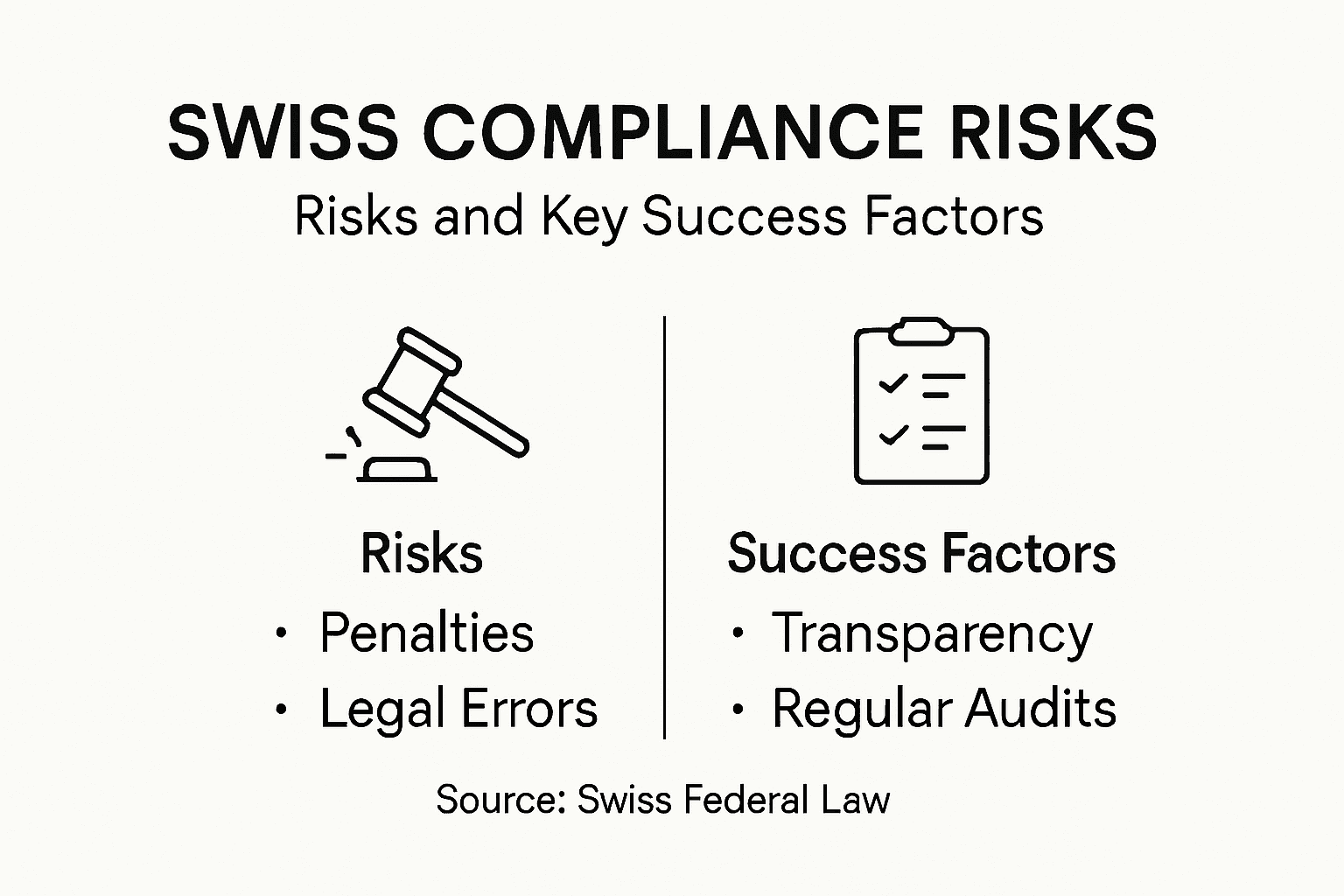
Under Article 716a of the Swiss Code of Obligations, directors have non-transferable and inalienable duties that extend far beyond traditional management responsibilities. These include strategic oversight, financial management, risk control, and ensuring comprehensive compliance across all organizational operations. Directors are legally obligated to implement robust internal control systems, monitor financial reporting, and proactively prevent potential legal and regulatory infractions.
Key director liabilities and duties encompass:
Strategic business decision making
Financial oversight and reporting accuracy
Implementing robust compliance frameworks
Risk management and mitigation
Ensuring transparency in corporate operations
Preventing potential legal and regulatory violations
Maintaining ethical business standards
Protecting shareholder and stakeholder interests
Pro tip: Regularly engage independent legal counsel to conduct comprehensive compliance audits and maintain a proactive approach to understanding evolving regulatory requirements.
This summary outlines directorial duties versus associated legal risks under Swiss law:
Director Duty | Positive Impact | Consequence of Negligence |
Strategic Oversight | Long-term value creation | Missed market opportunities |
Internal Controls | Enhanced fraud prevention | Increased risk of legal penalties |
Transparent Reporting | Builds stakeholder trust | Regulatory investigations |
Ethics and Compliance | Protects reputation | Potential personal liability |
Key Risks, Penalties, and Common Pitfalls
Swiss corporate compliance involves navigating a complex landscape of potential legal and financial risks that can significantly impact organizational sustainability. Corporate compliance risks encompass a wide range of regulatory, financial, and reputational challenges that demand proactive management and strategic oversight.
The penalties for non-compliance in Switzerland are substantial and multifaceted, extending beyond financial fines to include potential criminal liability, reputational damage, and long-term business disruptions. Companies and directors can face significant consequences for inadequate risk management, incomplete reporting, and failure to maintain robust internal control systems. These penalties are designed to enforce strict accountability and encourage comprehensive corporate governance.
Key risks and potential pitfalls include:
Inadequate financial reporting and disclosure
Insufficient internal control mechanisms
Non-compliance with regulatory updates
Poor risk assessment and management
Incomplete documentation of corporate activities
Lack of transparency in financial operations
Failure to implement comprehensive compliance frameworks
Ignoring evolving legal and regulatory standards
Pro tip: Develop a dynamic compliance management system that includes regular internal audits, continuous legal education, and adaptive risk assessment protocols to stay ahead of potential regulatory challenges.
Navigate Swiss Corporate Compliance with Confidence
The detailed risks and success factors outlined in Swiss corporate compliance can feel overwhelming without local expertise. Common challenges like meeting strict disclosure and reporting obligations, managing director liabilities, and maintaining comprehensive internal controls require thorough knowledge to avoid costly penalties. If you are an international entrepreneur or investor aiming to form an AG or GmbH structure in Switzerland, addressing these compliance complexities early is critical to sustainable success.

Take control of your Swiss company’s compliance journey today with RPCS. Our professional services encompass legal documentation, notarization, registration, banking setup, and ongoing administrative support designed specifically for foreign clients. Benefit from fast setup times, stringent legal compliance, and bespoke risk management solutions that shield your business from common pitfalls. Visit RPCS now and turn Swiss compliance challenges into strategic advantages for your venture.
Frequently Asked Questions
What are the key elements of Swiss corporate compliance?
Key elements of Swiss corporate compliance include comprehensive risk assessment protocols, regular internal and external auditing procedures, documentation of corporate governance practices, employee training on ethical standards, reporting mechanisms for violations, and monitoring regulatory changes.
What are the differences between an AG and a GmbH in Switzerland?
The main differences between an Aktiengesellschaft (AG) and a Gesellschaft mit beschränkter Haftung (GmbH) include share capital requirements, shareholder complexity, governance structures, reporting obligations, and flexibility for growth. AGs are suited for larger enterprises, while GmbHs cater to small and medium businesses.
What are the legal requirements for incorporating a company in Switzerland?
Incorporating a company in Switzerland involves selecting a legal structure, preparing documentation like articles of incorporation, registering with the Commercial Registry, obtaining necessary licenses, and ensuring compliance with tax regulations and corporate governance standards.
What are the potential risks and penalties of non-compliance in Switzerland?
Potential risks of non-compliance include inadequate financial reporting, insufficient internal control mechanisms, and failure to adapt to regulatory updates. Penalties can be substantial, including financial fines, criminal liability, and reputational damage.
Recommended
Comments