
Why Swiss Companies Are Ideal for IP Holding
- Jan 12
- 7 min read

Most American tech entrepreneurs are surprised to learn that Switzerland offers some of the world’s strictest IP protection standards while delivering substantial tax savings for global investors. This matters because digital assets often face piracy and unpredictable legal risks outside Swiss jurisdiction. Discover how Swiss IP holding companies provide not just favorable tax regimes but also robust confidentiality and international credibility, helping you safeguard innovation and maximize returns in challenging markets.
Table of Contents
Key Takeaways
Point | Details |
Strategic IP Management | Establishing a Swiss IP holding company allows businesses to centralize ownership, benefit from robust legal protections, and take advantage of favorable tax treatments. |
Legal Structure Selection | Companies should choose between various corporate formats, such as Swiss AG and GmbH, based on their specific needs for asset protection and operational efficiency. |
Tax Optimization | The participation exemption and patent box regime in Switzerland provide significant tax advantages, enabling companies to reduce liabilities on IP-generated income. |
Compliance and Support | Engaging specialized legal and tax advisors is crucial for navigating Switzerland’s regulatory landscape and ensuring compliance with international standards. |
Swiss IP holding companies explained
Switzerland has emerged as a premier destination for intellectual property (IP) holding companies, offering an exceptional legal and financial framework for businesses seeking strategic IP management. Robust IP protection mechanisms make Swiss jurisdictions particularly attractive for technology and innovation-driven enterprises looking to safeguard their intangible assets.
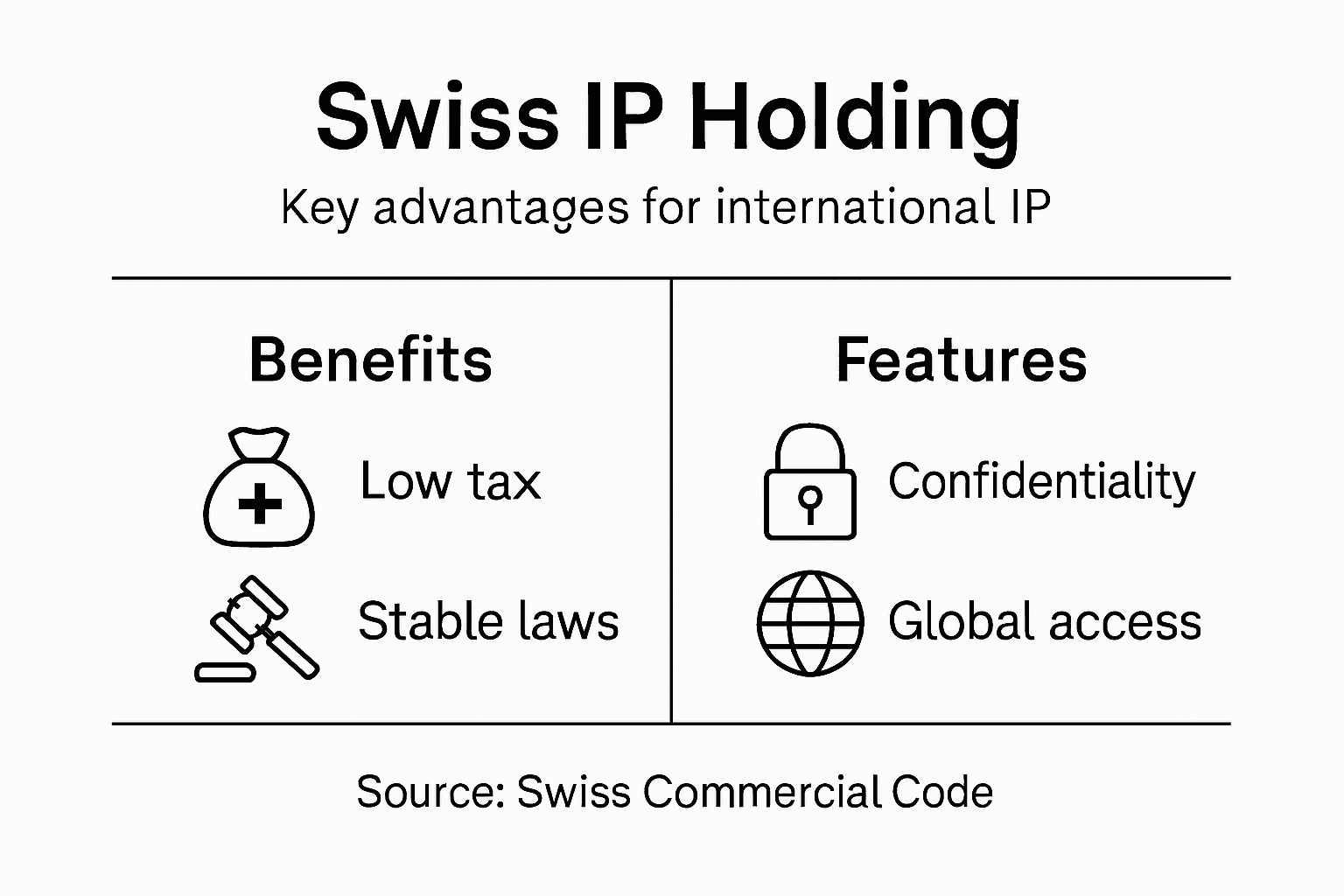
The Swiss IP holding company model provides multiple strategic advantages for international investors. These companies can centralize intellectual property ownership, benefit from favorable tax treatments, and leverage Switzerland’s sophisticated legal infrastructure. Key features include streamlined IP registration processes, strong legal protections for patents and trademarks, and a business environment that prioritizes innovation and intellectual asset management.
Swiss regulations offer comprehensive frameworks for IP management that distinguish them from other jurisdictions. Businesses can establish holding structures that separate IP ownership from operational entities, creating additional layers of legal and financial protection. Intellectual property financing mechanisms in Switzerland are particularly advanced, allowing companies to monetize and leverage their intellectual assets more effectively than in many other global markets.
Pro tip: When establishing a Swiss IP holding company, consult specialized legal experts who understand both international IP law and Swiss corporate regulations to maximize your strategic positioning.
Legal structures for IP management
IP management in Switzerland involves sophisticated legal structures designed to provide maximum protection and strategic flexibility for businesses. Companies can choose between several corporate formats, including Swiss AG (Aktiengesellschaft) and GmbH (Gesellschaft mit beschränkter Haftung), each offering unique advantages for intellectual property holding and management.

The most common legal structures for IP management include standalone IP holding companies, integrated corporate models, and specialized intellectual asset management entities. These structures allow businesses to strategically segregate IP ownership from operational risks, create tax-efficient frameworks, and provide robust legal protections. Swiss incorporation strategies enable companies to design complex IP management architectures that align with international legal standards and provide comprehensive asset protection.
Companies typically utilize three primary approaches for IP legal structures: pure holding companies, hybrid models, and operational IP management entities. Pure holding companies focus exclusively on IP asset ownership and licensing, while hybrid models integrate IP management with broader corporate activities. These approaches allow for flexible IP monetization, risk mitigation, and strategic asset positioning across different international jurisdictions.
Pro tip: Consult with Swiss corporate law specialists to design a tailored IP holding structure that matches your specific business objectives and international compliance requirements.
Here’s a summary comparison of popular Swiss legal structures for IP management:
Structure Type | Key Characteristics | Best For | Potential Drawbacks |
Swiss AG | High capital requirement, wide investor flexibility | Large enterprises, international groups | Higher setup and maintenance cost |
Swiss GmbH | Lower capital requirement, limited liability | SMEs and family businesses | Fewer financing options |
Standalone Holding | IP ownership isolated from operations | Asset protection, licensing | Less operational control |
Hybrid Management | Combines IP holding with business activities | Flexible, diverse strategies | More complex compliance |
Swiss tax regimes and participation exemption
Switzerland offers one of the most attractive tax environments for intellectual property holding companies, characterized by sophisticated participation exemption mechanisms that significantly reduce tax burdens for international investors. Swiss patent box tax regime introduces innovative approaches to taxing intellectual property income, allowing companies to benefit from substantial tax reductions on qualifying IP-generated revenues.
The participation exemption regime in Switzerland provides remarkable tax advantages for companies holding substantial equity stakes in subsidiary enterprises. Under this framework, dividends, capital gains, and other income derived from qualifying participations are effectively exempt from federal, cantonal, and municipal taxes. This approach enables businesses to create highly efficient corporate structures that minimize tax liabilities while maintaining full legal compliance with international tax standards.
Swiss tax regulations distinguish between different types of IP income, offering nuanced tax treatments based on the nature and origin of intellectual assets. Companies can leverage research and development deductions, implement strategic transfer pricing mechanisms, and utilize cantonal tax optimization strategies. These sophisticated approaches allow businesses to create complex yet legally sound tax structures that maximize financial efficiency while maintaining transparency and adherence to global tax regulations.
Pro tip: Work with specialized Swiss tax advisors who understand the intricate details of participation exemption to design a tailored tax optimization strategy for your intellectual property assets.
Below is a reference table highlighting major Swiss tax benefits for IP holding companies:
Tax Benefit Type | Description | Business Impact |
Participation Exemption | Exempts qualifying dividends and gains from most taxes | Substantial decrease in tax liability |
Patent Box Regime | Reduced tax rate on IP-derived income | Higher post-tax profits on innovation |
R&D Deductions | Tax credits for eligible R&D costs | Incentive for innovation investments |
Cantonal Optimization | Adjustable rates based on region | Customizable tax planning strategies |
Confidentiality, stability, and international credibility
Switzerland’s reputation for corporate confidentiality stands as a cornerstone of its appeal for international investors seeking secure intellectual property management. National IP law framework demonstrates an exceptional commitment to protecting sensitive business information, ensuring that companies can establish IP holding structures with the highest levels of legal security and discretion.
The Swiss legal system provides multilayered protections that go beyond traditional confidentiality measures. International businesses benefit from rigorous privacy laws, bank secrecy regulations, and comprehensive legal frameworks that shield corporate information from unauthorized disclosure. These protections extend to intellectual property documentation, corporate registrations, and sensitive financial records, creating an environment of unparalleled trust and stability for global investors.
Swiss jurisdiction offers a unique combination of transparency and confidentiality that sets it apart from other international business environments. The country’s robust legal infrastructure, combined with its neutral political stance and strong international reputation, creates an ideal ecosystem for companies seeking to protect their most valuable intellectual assets. Businesses can leverage Switzerland’s stable regulatory environment, which provides predictable legal outcomes, minimal bureaucratic interference, and a sophisticated approach to corporate governance.
Pro tip: Engage local Swiss legal experts who specialize in international corporate law to navigate the nuanced confidentiality protocols and maximize your intellectual property protection strategies.
Formation, compliance, and common pitfalls
Establishing an IP holding company in Switzerland requires navigating a complex landscape of regulatory requirements and strategic considerations. Swiss company formation strategies demand meticulous attention to legal documentation, corporate structure selection, and compliance protocols that vary across different Swiss cantons.
Common pitfalls for international investors include misunderstanding local regulatory nuances, underestimating documentation requirements, and failing to properly structure corporate entities. Businesses must carefully consider multiple critical factors during formation, including shareholder composition, capital requirements, and registration procedures. Successful IP holding companies typically require a minimum share capital, at least one Swiss resident director, and comprehensive documentation that demonstrates the legitimate business purpose of the entity.
The compliance landscape for Swiss IP holding companies involves multiple layers of regulatory oversight. International businesses must navigate complex requirements related to beneficial ownership reporting, transfer pricing regulations, and ongoing financial reporting. Key compliance challenges include maintaining accurate corporate records, ensuring transparent financial statements, and adhering to Swiss and international tax reporting standards. Investors must also be prepared to demonstrate the economic substance of their IP holding structures to avoid potential challenges from tax authorities.
Pro tip: Engage specialized Swiss corporate formation experts who can provide comprehensive guidance through the intricate legal and regulatory requirements specific to IP holding company establishment.
Unlock the Full Potential of Your Swiss IP Holding Company Today
Navigating the complex legal structures and tax advantages of Swiss IP holding companies can feel overwhelming without local expertise. Key challenges such as choosing the optimal legal format, ensuring compliance with participation exemption tax rules, and maintaining confidentiality require trusted guidance. If you seek to centralize IP ownership while maximizing tax efficiency and protecting your intangible assets, expert support is crucial.

At https://rpcs.ch, we specialize in simplifying Swiss company formation for international entrepreneurs and investors. From establishing your Swiss AG or GmbH to navigating notarization, registration, and banking setup, our comprehensive services ensure rapid, confidential, and fully compliant solutions tailored to intellectual property holding. Benefit from our deep understanding of Swiss incorporation advantages, including tax optimization and robust corporate governance. Start building your strategic IP holding structure now with Swiss company formation experts dedicated to your success.
Frequently Asked Questions
What are the benefits of establishing an IP holding company in Switzerland?
Establishing an IP holding company in Switzerland offers several benefits, including robust legal protection for intellectual property, favorable tax regimes such as participation exemptions, and a stable regulatory environment that promotes innovation and corporate confidentiality.
How does the participation exemption work for IP holding companies in Switzerland?
The participation exemption allows IP holding companies to receive dividends and capital gains from subsidiary enterprises without facing federal, cantonal, and municipal taxes, significantly reducing the overall tax burden and improving financial efficiency.
What legal structures are available for IP management in Switzerland?
Common legal structures for IP management in Switzerland include Swiss AG (Aktiengesellschaft), Swiss GmbH (Gesellschaft mit beschränkter Haftung), standalone holding companies, and hybrid models. Each structure offers unique advantages depending on the business needs and operational strategies.
What are the common pitfalls to avoid when forming an IP holding company in Switzerland?
Common pitfalls include misunderstanding local regulatory requirements, underestimating documentation needs, and improper corporate structuring. It’s crucial to engage with Swiss corporate formation experts to navigate these complexities effectively.
Recommended
Comments