
How to Prepare Swiss Company Documents for Incorporation
- Nov 30, 2025
- 7 min read
Updated: Dec 16, 2025

Over 30 percent of international founders encounter delays when setting up a Swiss company, yet many american entrepreneurs still see Switzerland as the gold standard for corporate stability. The process for establishing a legal business presence here can seem detailed and unfamiliar, especially with strict local rules and documentation requirements. Gaining a clear roadmap for each official step from gathering information to final approval helps you avoid unnecessary setbacks and positions your american company for a strong start in Switzerland.
Table of Contents
Quick Summary
Important Insight | Explanation |
1. Gather Essential Company Details | Compile key information like legal name, type, and business activities for registration preparation. |
2. Draft Comprehensive Statutory Documents | Create foundational legal documents aligning with Swiss regulations to establish corporate identity and governance. |
3. Obtain Notarizations and Certifications | Ensure all documents are authenticated by a notary to become legally recognized in Swiss corporate law. |
4. Submit to Swiss Authorities Precisely | Prepare a complete application package to the Swiss commercial registry, checking for accuracy and necessary translations. |
5. Verify Compliance During Approval Process | Maintain communication with the registry to address requests promptly, ensuring quick approval of your incorporation. |
Step 1: Gather Essential Company Information
Preparing for Swiss company incorporation requires meticulous documentation gathering. You will need to collect and organize a comprehensive set of corporate details that form the foundation of your business registration process.
Start by compiling critical information about your proposed Swiss company, including the full legal business name, proposed company type (such as GmbH or AG), intended business activities, and initial share capital. You will want to prepare detailed documentation that clearly outlines your company’s operational scope, including potential industry classifications and specific business objectives. Ensure you have precise corporate details ready, such as the proposed registered business address in Switzerland, which can be a physical location or a professional virtual office service.
Key documents you should prepare include proof of initial capital, shareholder information, proposed director credentials, and a clear business plan. For international entrepreneurs, securing a Swiss nominee director service can streamline this process significantly. Professional services can help navigate complex registration requirements and ensure all documentation meets Swiss corporate regulations.
Pro tip: Work with a Swiss incorporation specialist who understands local regulatory nuances. They can help you avoid common documentation mistakes that could delay your company formation process. The next step involves formally preparing and notarizing these essential corporate documents for official submission.
Step 2: Draft Statutory Documents and Agreements
This critical phase involves creating the foundational legal documents that will define your Swiss company’s entire operational framework and governance structure. You will transform your business concept into a legally binding set of documents that establish your corporate identity.
According to Approovd, your Articles of Incorporation represent the primary constitutional document for your Swiss company. These documents must comprehensively outline your company’s purpose, share capital structure, shareholder rights, and governance mechanisms. Genie AI emphasizes that these documents must precisely align with the Swiss Code of Obligations, detailing critical aspects like initial capital contributions, voting rights, and board member responsibilities.
When drafting these documents, you should focus on creating clear, unambiguous language that covers all potential operational scenarios. Include specific provisions about shareholder meetings, decision making processes, profit distribution, and corporate restructuring possibilities. Professional legal counsel specializing in Swiss corporate law can help ensure your documents are comprehensive and legally compliant. Pro tip: Have a multilingual legal expert review your documents to confirm they meet both Swiss legal requirements and international standards. The next step will involve formally notarizing these critical statutory documents with a certified Swiss legal professional.

Step 3: Obtain Official Certifications and Notarizations
This crucial step transforms your company documents from drafts into legally recognized instruments that carry official weight in the Swiss corporate landscape. You will navigate the intricate process of authenticating your corporate documentation through professional legal channels.
Wikipedia) explains that in Switzerland, notaries are specialized legal professionals authorized to authenticate documents and certify legal transactions. These professionals will meticulously review your statutory documents, verifying their compliance with Swiss corporate regulations. During the certification process, you will need to present original documents, including your Articles of Incorporation, shareholder agreements, and proof of initial capital. The notary will carefully examine each document for accuracy, legal completeness, and adherence to Swiss corporate law standards.
To streamline this process, prepare multiple certified copies of your documents and ensure all information is consistent across different forms. Work with a notary who specializes in international corporate formations and understands the nuanced requirements for foreign entrepreneurs establishing Swiss companies. Pro tip: Schedule multiple consultation slots with your chosen notary to expedite the certification process and address any potential documentation gaps quickly. The next step involves submitting these officially certified documents to the appropriate Swiss commercial registry for final company registration.
Step 4: Submit Documents to Swiss Authorities
This critical stage transforms your meticulously prepared corporate documents into an official Swiss business entity. You will navigate the complex bureaucratic landscape of Swiss commercial registration with precision and strategic planning.
The submission process requires compiling all officially notarized documents into a comprehensive application package for the Swiss commercial registry. You will need to include your fully certified Articles of Incorporation, shareholder agreements, proof of initial capital, identification documents for directors and shareholders, and a detailed business plan. Prepare multiple copies of each document and ensure they are translated into an official Swiss language (German, French, or Italian) if originally prepared in another language.
Check every document for absolute accuracy before submission. Small errors can cause significant processing delays that could potentially stall your entire incorporation timeline. Our comprehensive guide to Swiss company registration provides additional insights into navigating this complex process. Pro tip: Consider engaging a local corporate registration specialist who understands the nuanced requirements of Swiss administrative procedures.
These professionals can help you anticipate potential issues and expedite your submission. The next phase involves waiting for official approval and receiving your company registration confirmation from Swiss commercial authorities.
Step 5: Verify Compliance and Document Approval
This crucial stage represents the final validation of your Swiss company incorporation process. You will carefully navigate the complex regulatory landscape to ensure your documents meet every legal requirement for official approval.
According to the Swiss Board Institute, the verification process demands meticulous attention to detail across multiple regulatory dimensions. Your documents will undergo comprehensive scrutiny by Swiss commercial registry officials who will examine each aspect of your submission for full legal compliance. This includes verifying shareholder identities, confirming capital contribution structures, validating corporate governance frameworks, and ensuring all documentation precisely adheres to Swiss corporate regulations.
Prepare for potential requests for additional information or clarification during the approval process. Some jurisdictions might require supplementary documentation or request specific explanations about your business model or corporate structure. Pro tip: Maintain open communication channels with the commercial registry and respond promptly to any inquiries to prevent unnecessary processing delays. Your responsiveness can significantly accelerate the approval timeline.
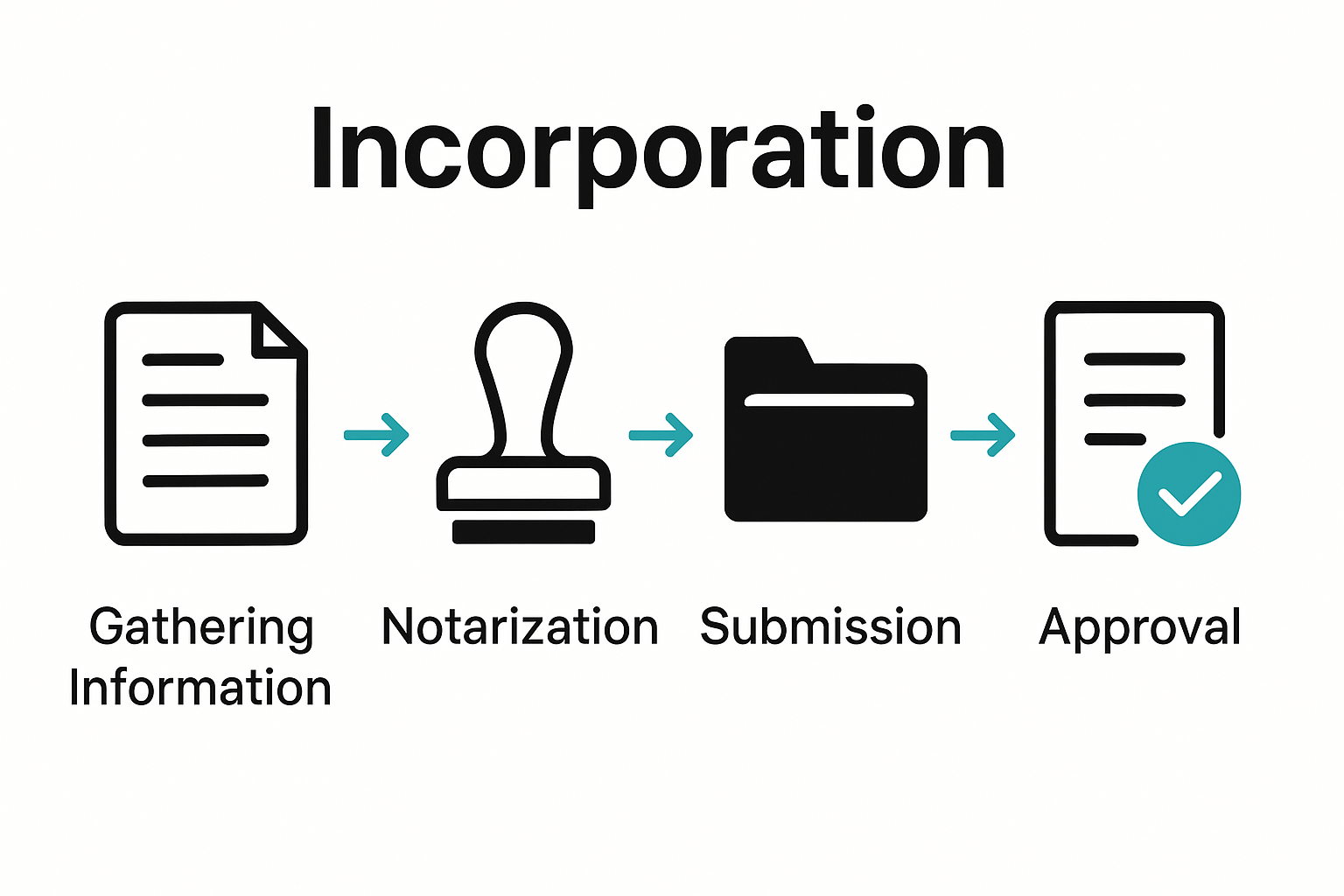
The final outcome of this stage will be receiving your official company registration number and corporate certification documents from Swiss authorities.
Simplify Your Swiss Company Incorporation with Expert Support
Preparing all the necessary corporate documents for Swiss company registration can feel overwhelming. From gathering essential business details to drafting precise Articles of Incorporation and securing notarization, each step demands accuracy and compliance with Swiss legal standards. If you worry about document errors, delays, or complex regulatory requirements, you are not alone. Smooth and timely preparation is critical to avoid costly setbacks and to fully leverage Switzerland’s attractive business environment.

At rpcs.ch, we specialize in guiding international entrepreneurs through every phase of Swiss company setup. Whether you need assistance with notarizing corporate documents, drafting shareholder agreements, or registering your GmbH or AG, our professional services ensure fast, confidential, and legally compliant incorporation. Act now to secure seamless company formation and focus on growing your business. Explore how our tailored solutions can relieve your administrative burden at rpcs.ch and learn more about our virtual office services and nominee director options. Your Swiss business journey starts here.
Frequently Asked Questions
What documents do I need to prepare for Swiss company incorporation?
To incorporate a company in Switzerland, you need to gather critical documents such as proof of initial capital, shareholder details, proposed director credentials, and a comprehensive business plan. Start by listing these documents to ensure you don’t miss anything during the preparation phase.
How do I draft the Articles of Incorporation for my Swiss company?
The Articles of Incorporation must outline your company’s purpose, share capital, and governance structure in precise language. Draft this document thoroughly and include details about shareholder rights and decision-making processes, then have a legal expert review it for compliance before notarization.
What is the process for notarizing my company documents in Switzerland?
Notarizing your documents involves having a qualified notary review and authenticate your Articles of Incorporation and other essential records. Schedule a meeting with a notary who specializes in corporate law to ensure a smooth process and prepare multiple certified copies of your documents for this step.
How can I ensure my submitted documents comply with Swiss regulations?
To verify compliance, carefully check your documents for accuracy and completeness, ensuring they adhere to Swiss corporate law standards. Conduct a thorough review before submission and maintain open communication with the registration authority to address any inquiries promptly.
What should I do if my incorporation documents are delayed or require additional information?
If your incorporation documents face delays, respond quickly to any requests for additional information from the registration authority. Monitor the status of your application regularly and prepare to provide any necessary clarifications to expedite the approval process.
Recommended
Comments