
Swiss business visa explained: your 2026 guide
- Mar 9
- 10 min read

Many entrepreneurs believe the Swiss business visa grants automatic work authorization. This misconception creates costly delays and compliance issues. The visa allows business establishment, but separate permits are required for legal employment. Understanding eligibility criteria, application steps, and cantonal variations is critical for successful Swiss business formation. This guide clarifies the process and provides actionable steps to navigate the Swiss business visa in 2026.
Table of Contents
Key takeaways
Point | Details |
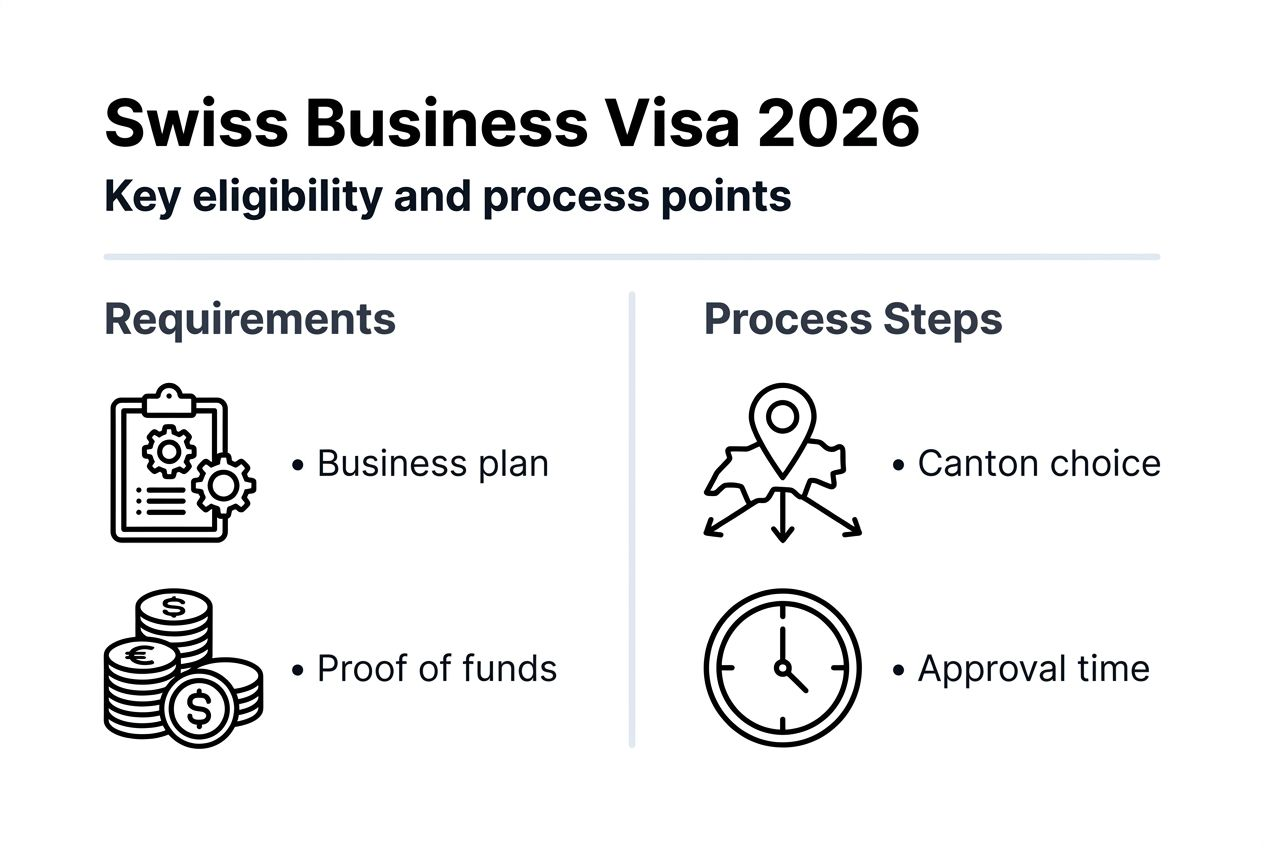
Visa vs. work permit | Business visa enables company formation but does not authorize employment without separate work permits. |
Eligibility requirements | Entrepreneurs need viable business plans; investors must demonstrate sufficient capital and economic benefit. |
Cantonal variations | Processing times range from 4 to 12 weeks depending on canton choice and local requirements. |
Documentation standards | Complete applications require business plans, financial forecasts, proof of funding, and criminal records. |
Post-approval steps | Residence permit B and work permits require separate applications after visa approval. |
Introduction to the Swiss business visa
The Swiss business visa enables foreign entrepreneurs and investors to establish a legal business presence in Switzerland. This visa category targets two primary applicant types: entrepreneurs who actively manage new ventures and investors who provide capital with varying levels of operational involvement.
Switzerland designed this visa framework to attract economic growth through foreign investment and entrepreneurship. The country’s stable economy, favorable tax regime, and global credibility make it an attractive destination for business formation. Understanding the distinction between business visas, tourist visas, and work permits is essential before beginning your application.
Eligible applicants include:
Entrepreneurs launching new Swiss companies with active management roles
Investors providing capital for Swiss businesses regardless of daily operational involvement
Business owners relocating existing operations to Switzerland
High-net-worth individuals seeking to establish Swiss corporate entities
The business visa differs fundamentally from tourist and work permits. Tourist visas allow temporary visits without business activity. Work permits authorize employment but require employer sponsorship. The business visa specifically facilitates company establishment and ownership without automatic work authorization.
Switzerland’s appeal extends beyond tax advantages. The country offers political stability, robust legal frameworks, and access to European markets. These factors combine to create an environment where company formation in Switzerland attracts entrepreneurs worldwide seeking credibility and growth opportunities.
Eligibility criteria and application requirements
Entrepreneurs must demonstrate active management capabilities with viable business plans showing clear economic benefit to Switzerland. Your business plan should outline market analysis, competitive positioning, and three-year financial forecasts. Cantonal authorities evaluate whether your venture creates jobs, generates tax revenue, or introduces valuable expertise.

Investors face different standards. You must show sufficient investment capital and job creation potential, even without daily management responsibilities. Minimum investment thresholds vary by canton and business type, typically ranging from CHF 250,000 to CHF 1 million.
Required documentation includes:
Valid passport with minimum six months validity
Comprehensive business plan with detailed financial forecasts
Proof of funding through bank statements or investment commitments
Clean criminal record from your home country and recent residences
Professional qualifications demonstrating relevant business expertise
Curriculum vitae highlighting entrepreneurial or investment experience
Financial proof requirements depend heavily on your chosen canton and business structure. Some cantons require liquid assets proving you can support yourself and your business for at least 12 months. Others focus on total investment amounts and job creation projections. Clarity and completeness in documentation reduce processing delays significantly.
Pro Tip: Engaging expert advisors to prepare your business plan dramatically improves approval chances. Professional consultants understand cantonal preferences and can structure your application to highlight economic benefits authorities prioritize.
Your business plan should address specific Swiss market conditions. Generic plans copied from other jurisdictions rarely succeed. Demonstrate knowledge of local regulations, competitive landscape, and how your venture fills market gaps. Include realistic hiring timelines, revenue projections, and contingency strategies.
Step-by-step Swiss business visa application process
The Swiss business visa application process involves multiple stages with cantonal or federal immigration authorities depending on your intended business location. Understanding each step helps you prepare thoroughly and avoid common pitfalls.
Prepare complete documentation package including all required forms and supporting materials
Submit application to cantonal migration office where you plan to establish your business
Await initial review and respond promptly to any information requests
Attend interview if requested by cantonal authorities to discuss your business plan
Receive preliminary approval or request for additional documentation
Obtain final visa decision and proceed with company registration
Processing times typically range between 4 and 12 weeks due to cantonal differences. Some cantons like Zurich process applications faster through streamlined procedures. Others conduct more extensive reviews requiring longer timelines. Setting realistic expectations prevents frustration during the waiting period.
Key procedural considerations include:
Submitting applications in the canton where your business will operate
Providing translations of all non-English or non-German documents
Maintaining regular communication with assigned case officers
Preparing for potential interview questions about business viability
Keeping financial documentation current throughout the review period
Work permit applications require separate submissions after visa approval. The business visa allows entry and company formation but does not authorize employment. You must apply for Swiss business permits to legally work in your own company. This two-step process often confuses applicants who assume visa approval grants complete work authorization.
Pro Tip: Applying through cantons with established entrepreneur programs like Zurich or Vaud accelerates approval. These regions have streamlined processes and officers experienced in evaluating business applications.
Consider timing your application strategically. Avoid peak holiday periods when processing slows. Submit applications early in the calendar year when cantonal offices have fresh budgets and resources. Plan for contingencies by building buffer time into your business launch schedule.
Once approved, you can proceed with Swiss VAT registration and other compliance requirements. Coordinate visa timing with company formation steps to ensure smooth transitions between legal milestones. Secure website hosting should also be arranged early to establish your digital presence.
Cantonal differences and practical considerations
Cantonal authorities manage most business visa applications with distinct rules affecting approval likelihood and processing speed. Understanding these variations helps you select the optimal canton for your application and set appropriate expectations.
Canton | Processing Time | Key Features | Investor Focus |
Zurich | 4-6 weeks | Streamlined procedures, tech-friendly | High-growth startups |
Geneva | 8-10 weeks | International business emphasis | Finance and trading |
Vaud | 6-8 weeks | Entrepreneur support programs | Innovation sectors |
Zug | 5-7 weeks | Tax advantages, crypto-friendly | Technology ventures |
Approval speed varies dramatically based on cantonal resources and priorities. Some cantons process straightforward applications in four weeks. Others conduct extensive economic impact analyses extending timelines to 12 weeks or more. Cantonal variations in business visa procedures influence both processing times and approval standards significantly.
Certain cantons actively court entrepreneurs through dedicated support programs. These regions offer faster processing, clearer guidance, and officers trained in evaluating startup viability. Other cantons favor traditional investors emphasizing job creation and capital deployment over innovative business models.
Considerations for canton selection:
Processing speed aligning with your business launch timeline
Industry-specific expertise and support infrastructure
Tax rates and business-friendly regulations
Proximity to target markets or business partners
Quality of life and family considerations
Applicants can strategically select cantons like Zurich for technology ventures or Geneva for international trading businesses. Aligning your business profile with cantonal economic priorities increases approval chances. Research each canton’s published guidelines and recent approval patterns before deciding.
Understanding these distinctions reduces rejection risk and prevents lengthy delays. Consult with professionals familiar with cantonal preferences to optimize your application strategy. Some applicants benefit from targeting less competitive cantons where approval rates run higher despite slightly longer processing times.
Common misconceptions about Swiss business visa
Clearing up frequent misunderstandings prevents costly application errors and compliance violations. Many entrepreneurs approach the Swiss business visa process with incorrect assumptions that create obstacles.
The most common confusion involves equating the business visa with automatic work authorization. Work permits require separate applications and cantonal approval even after receiving your business visa. You cannot legally work in Switzerland, even in your own company, until obtaining the appropriate work permit. This two-tier system protects Swiss labor markets while enabling foreign business formation.
Key misconceptions to avoid:
Assuming business visa grants immediate work rights without additional permits
Confusing Swiss business visa with EU Blue Card for high-skilled workers
Believing tourist or business visitor visas suffice for company formation activities
Underestimating documentation requirements and financial proof standards
Expecting uniform procedures across all cantons
The Swiss business visa differs fundamentally from the EU Blue Card. The Blue Card targets employed professionals with job offers, while the business visa facilitates entrepreneurship and investment. Each serves distinct purposes within Swiss immigration policy.
Many applicants underestimate required documentation depth. Generic business plans or incomplete financial forecasts trigger delays or rejections. Cantonal officers evaluate applications thoroughly, scrutinizing market assumptions and financial viability. Submitting polished, comprehensive documentation from the start prevents unnecessary rounds of information requests.
Some entrepreneurs mistakenly believe business visitor visas allow company formation activities. These short-term visas permit meetings and negotiations but not legal entity establishment or contract signing. Using incorrect visa categories for business formation creates legal complications and potential immigration violations.
Understanding these distinctions ensures compliant, timely applications. Invest time researching specific requirements rather than relying on assumptions. Consult official cantonal guidance and professional advisors to verify your understanding before submitting applications.
From visa to residency and work permits
Successful business visa holders must transition to residence and work permits for legal operations. This progression involves additional applications and ongoing compliance obligations often overlooked during initial planning.
The Swiss business visa leads to residence permit B, allowing you to stay and operate your business legally. Maintaining this permit requires continuous business activity consistent with your original application. Cantonal authorities monitor whether your venture generates promised economic benefits.
Work permits remain distinct and require separate applications. Even as company owner, you need authorization to work legally in Switzerland. This process involves demonstrating your business generates sufficient activity to justify your employment. Some cantons grant work permits quickly to business visa holders, while others conduct thorough economic reviews.
Renewal considerations:
Demonstrating ongoing business activity and economic contribution
Maintaining financial solvency and meeting original business plan milestones
Complying with Swiss tax obligations and regulatory requirements
Providing updated financial statements and employment records
Renewing both residence and work permits before expiration
Renewals depend heavily on economic contribution and legal compliance. Cantonal authorities evaluate whether your business created projected jobs, generated expected revenue, and contributed to local economic development. Falling short of original projections can jeopardize renewal, though reasonable explanations for market changes are typically accepted.
Pro Tip: Maintaining continuous communication with cantonal authorities and professional legal support smooths renewal processes and prevents status lapses. Regular check-ins demonstrate good faith and allow early resolution of potential issues.
Plan for permit renewals well before expiration dates. Processing times for renewals vary, and gaps in authorization create legal complications. Some permits require renewal annually, while others extend for longer periods based on business performance.
Companies must also maintain proper corporate governance and financial reporting. Swiss authorities expect regular filing of financial statements, tax returns, and employment documentation. Partnering with local accounting and legal professionals ensures ongoing compliance without overwhelming administrative burden.
Conclusion and practical next steps
Navigating the Swiss business visa successfully requires understanding eligibility criteria, documentation standards, application procedures, and cantonal variations. Clear preparation and strategic planning significantly improve approval chances and accelerate your Swiss business launch.
Key insights recap:
Business visa enables company formation but requires separate work permits for employment authorization
Complete documentation with thorough business plans and financial proofs prevents delays
Cantonal selection based on processing speed and industry alignment optimizes outcomes
Post-approval transition to residence and work permits demands ongoing compliance
Professional support strengthens applications and navigates complex requirements
Begin your preparation by developing a comprehensive business plan addressing Swiss market conditions. Include detailed financial forecasts, competitive analysis, and clear economic benefit projections. Gather all required documentation early, ensuring translations and certifications meet cantonal standards.
Select your target canton strategically based on processing timelines, industry expertise, and business-friendly policies. Research recent approval patterns and consult professionals familiar with local preferences. Aligning your application with cantonal priorities increases success likelihood.
Engage professional advisors to review your business plan and application materials. Expert guidance identifies weaknesses before submission and structures proposals to emphasize factors cantonal authorities value. This investment pays dividends through faster approvals and stronger legal foundations.
Prepare for the transition from visa to residence and work permits early in your planning. Understand renewal requirements and ongoing compliance obligations. Building these considerations into your business model prevents surprises and ensures continuous legal status.
Our Swiss company formation services can simplify your business visa journey
Establishing a Swiss business presence involves complex legal requirements and administrative procedures. Professional guidance accelerates the process and ensures compliance from day one.
RPCS Solutions offers expert Swiss company formation services simplifying visa and business setup complexities. Our team guides you through documentation preparation, cantonal selection, and application submission. We coordinate with authorities on your behalf, managing communications and responding to information requests promptly.
Our comprehensive accounting services ensure your Swiss entity meets ongoing financial reporting and tax obligations. Proper bookkeeping supports permit renewals by demonstrating economic activity and compliance. We handle payroll, VAT registration, and annual financial statements, letting you focus on business growth.
Partner with experienced professionals to accelerate your Swiss business establishment. Our knowledge of cantonal procedures and regulatory requirements helps you avoid common pitfalls and launch successfully.
FAQ
What is the difference between the Swiss business visa and work permit?
The business visa allows entry and company formation activities in Switzerland. Work permits authorize actual employment and require separate applications after visa approval. Both are essential for legally working in your Swiss business.
How long does the Swiss business visa application process take?
Processing times vary by canton, typically ranging from 4 to 12 weeks. Zurich and other entrepreneur-friendly cantons often process applications faster. Selecting cantons with streamlined procedures and submitting complete documentation shortens waiting periods.
What documents are essential for a successful Swiss business visa application?
You need a valid passport, detailed business plan with three-year financial forecasts, proof of investment capital, clean criminal record, and professional qualifications. Complete and polished documentation significantly increases approval chances and reduces processing delays.
Can investors who are not active managers apply for the Swiss business visa?
Yes, investors can qualify by demonstrating significant capital investment and economic benefit potential. Active management is not required if you show sufficient financial commitment and job creation prospects. Cantonal criteria may influence acceptance based on your specific investor role and business structure.
Recommended
Comments