
Swiss Incorporation Timeline: Complete Step-by-Step Guide
- Nov 18, 2025
- 8 min read

Forming a company in Switzerland appeals to many international entrepreneurs for good reason. Swiss business incorporation can take as little as four weeks, offering a secure and efficient route into one of Europe’s most respected markets. Business owners benefit from Switzerland’s clear legal framework, excellent global reputation, and attractive tax environment. With the right approach, understanding the timeline and specific steps involved makes turning your business idea into a legally recognized Swiss company both realistic and rewarding.
Table of Contents
Key Takeaways
Point | Details |
Incorporation Timeline | The Swiss business incorporation process typically spans 4 to 8 weeks, depending on document completeness and administrative efficiency. |
Corporate Structures | Entrepreneurs can choose between an Aktiengesellschaft (AG) requiring 100,000 CHF minimum capital and a Gesellschaft mit beschränkter Haftung (GmbH) with a 20,000 CHF minimum capital, each with unique advantages. |
Documentation Requirements | Successful incorporation necessitates meticulous preparation of essential documents, including passports, business plans, and proof of capital. |

| | Navigating Challenges | Awareness of potential delays and proactive strategies, such as engaging local expertise and ensuring document accuracy, are key to a smooth incorporation experience. |
Defining Swiss Incorporation Timeline and Process
Incorporating a business in Switzerland represents a strategic pathway for international entrepreneurs seeking a stable, credible, and tax-efficient jurisdiction. The Swiss incorporation process is meticulously structured, designed to provide transparency, legal protection, and operational efficiency for both local and foreign business owners. Understanding this timeline helps investors navigate the complex legal landscape with confidence.
The typical Swiss incorporation journey involves several critical stages that transform your business concept into a legally recognized corporate entity. Key stages include initial preparation, documentation gathering, company type selection, registration procedures, and post-incorporation administrative requirements. While the process might seem complex, Switzerland’s well-defined regulatory framework ensures a streamlined approach for serious business professionals.
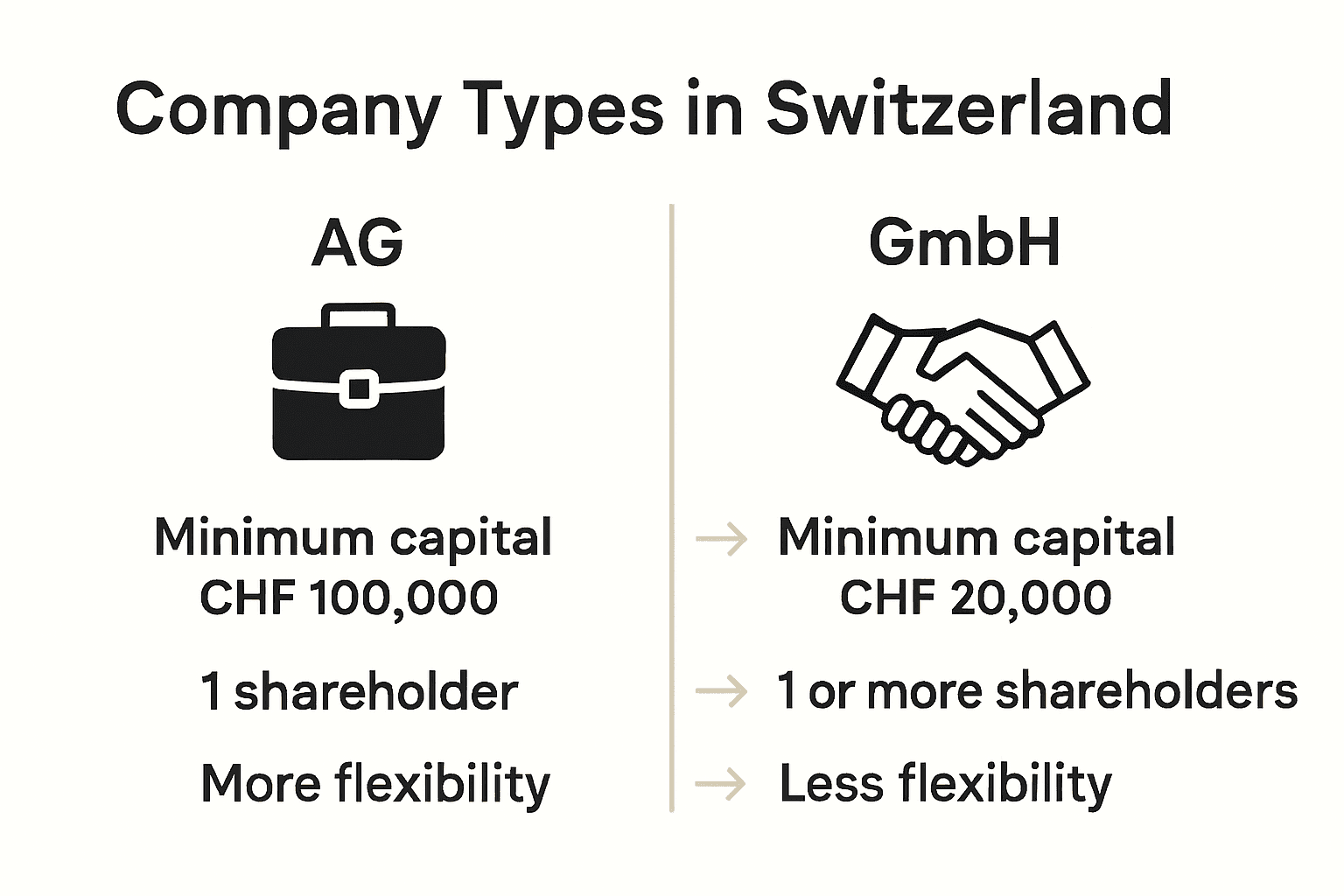
Businesses have multiple incorporation options in Switzerland, primarily focusing on two primary corporate structures: the Aktiengesellschaft (AG) and the Gesellschaft mit beschränkter Haftung (GmbH). Each structure offers unique advantages and requires specific setup protocols. For instance, an AG demands a minimum capital of 100,000 CHF, while a GmbH requires a minimum of 20,000 CHF. These structures provide different levels of liability protection, shareholder rights, and operational flexibility. Entrepreneurs must carefully evaluate their business goals, funding requirements, and long-term strategic objectives when selecting their ideal corporate format.
To ensure a smooth incorporation process, foreign investors should anticipate a timeline ranging from 4 to 8 weeks. This period encompasses crucial steps like name reservation, document preparation, capital deposit, statutory declarations, and official registration. For comprehensive guidance through this journey, consider exploring our steps to open a Swiss holding company which provides detailed insights into the intricate incorporation landscape. The process demands precision, legal compliance, and strategic planning to successfully establish a robust business presence in Switzerland.
Types of Swiss Companies and Key Differences
Switzerland offers sophisticated corporate structures that cater to diverse international business needs, with two primary company types standing out: the Aktiengesellschaft (AG) and the Gesellschaft mit beschränkter Haftung (GmbH). These legal entities provide unique frameworks for entrepreneurs seeking to establish a robust business presence in this strategically advantageous jurisdiction.
Aktiengesellschaft (AG): Corporate Powerhouse
The AG represents the most prestigious and complex corporate structure in Switzerland, designed for larger enterprises and ambitious international ventures. Characterized by its robust legal framework, an AG requires a minimum share capital of 100,000 CHF, which must be fully subscribed during incorporation. Key features include:
Ability to issue publicly tradable shares
Minimum of one shareholder (can be corporate or individual)
Separate legal entity with limited shareholder liability
Complex governance requirements, including a board of directors
Gesellschaft mit beschränkter Haftung (GmbH): Flexible Alternative
In contrast, the GmbH offers a more flexible and cost-effective approach for small to medium-sized enterprises. With a lower entry barrier of 20,000 CHF minimum capital, this structure provides significant operational advantages. As highlighted in our guide on Swiss GmbH advantages, this format is particularly attractive for startups and medium-scale businesses.
Key distinguishing factors between AG and GmbH include capital requirements, governance complexity, and shareholder flexibility. While an AG demands more stringent reporting and administrative protocols, a GmbH offers more straightforward management and lower operational costs. Entrepreneurs must carefully evaluate their specific business objectives, growth strategies, and financial capabilities when selecting between these two prominent Swiss corporate structures.
Essential Steps and Required Documentation
Incorporating a business in Switzerland demands meticulous preparation and comprehensive documentation. The process requires foreign entrepreneurs to gather a precise set of documents that demonstrate legal compliance, financial stability, and strategic business intent. Understanding these requirements is crucial for a smooth and successful company formation experience.
Key Documentation Requirements
The essential documentation for Swiss company incorporation typically includes:
Passport copies of all shareholders and directors
Proof of residential address for each key stakeholder
Detailed business plan outlining company objectives
Articles of association specifying corporate governance structure
Proof of initial capital demonstrating financial commitment
Criminal record extracts for primary shareholders
Notarized identification documents
Specific Procedural Steps
Each document must meet Switzerland’s stringent regulatory standards. Foreign investors need to prepare certified translations of all non-English documents, ensuring complete accuracy and legal validity. The documentation process involves multiple verification stages, including authentication by Swiss commercial registries and potential notarization of critical business papers.
Navigating these complex requirements can be challenging, which is why many international entrepreneurs seek professional guidance. For comprehensive insights into establishing your Swiss business banking foundation, understanding Swiss business bank account procedures becomes an integral part of your incorporation strategy. Successful documentation preparation not only expedites the incorporation process but also demonstrates your commitment to maintaining highest standards of corporate transparency and legal compliance in the Swiss business ecosystem.
Legal Requirements and Regulatory Timeframes
Swiss incorporation involves a comprehensive legal framework designed to ensure business transparency, financial integrity, and regulatory compliance. Foreign entrepreneurs must navigate a complex landscape of national and cantonal regulations that govern company formation, each with specific procedural requirements and statutory obligations that demand meticulous attention to detail.
Key Regulatory Considerations
The Swiss legal system imposes rigorous standards for business incorporation, focusing on several critical dimensions:
Minimum capital requirements varying by company structure
Mandatory shareholder declarations
Comprehensive beneficial ownership reporting
Annual financial statement submissions
Regular tax compliance documentation
Mandatory commercial registry registrations
Incorporation Timeframe Expectations
Typically, the Swiss incorporation process spans 4 to 8 weeks, contingent upon the completeness of documentation and the specific canton’s administrative efficiency. Each stage demands precise execution, from initial name reservation to final commercial registry registration. Entrepreneurs must anticipate potential delays arising from document verification, translation requirements, and regulatory scrutiny.
For international investors seeking deeper insights into navigating these complex regulatory landscapes, 7 key advantages of Swiss GmbH provide crucial context for understanding the strategic benefits of Swiss corporate structures. The intricate legal framework ultimately serves to protect both investors and the broader economic ecosystem, ensuring that only well-prepared and legitimate business entities can establish themselves in this prestigious jurisdiction.
Common Delays and How to Avoid Them
The Swiss incorporation process, while systematically designed, presents numerous potential bottlenecks that can significantly extend project timelines for international entrepreneurs. Understanding these common challenges and implementing proactive strategies becomes crucial for maintaining momentum and ensuring a smooth business establishment experience in Switzerland.
Frequent Incorporation Roadblocks
Most incorporation delays stem from a handful of predictable issues:
Incomplete documentation requiring multiple resubmissions
Translation errors in legal and financial documents
Inconsistent shareholder information
Complex beneficial ownership declarations
Banking compliance verification challenges
Cantonal administrative processing variations
Strategic Mitigation Approaches
Preemptive preparation represents the most effective method for avoiding incorporation delays. This involves comprehensive document verification, engaging local legal expertise, and maintaining absolute precision in all submitted materials. Foreign entrepreneurs must anticipate potential complications by preparing redundant documentation, securing professional translation services, and understanding nuanced cantonal regulatory requirements.
For international investors seeking to streamline their incorporation journey, understanding Swiss business bank account procedures can provide critical insights into navigating potential administrative complexities. Successful incorporation requires a combination of meticulous preparation, local expertise, and a strategic approach to managing regulatory expectations. By anticipating potential challenges and developing robust mitigation strategies, entrepreneurs can significantly reduce incorporation timelines and minimize administrative friction.
Comparing Swiss Incorporation With Other Jurisdictions
Navigating the global landscape of business incorporation requires a nuanced understanding of each jurisdiction’s unique regulatory environment. Switzerland stands out as a premier destination for international entrepreneurs, offering a distinctive blend of regulatory clarity, economic stability, and strategic advantages that set it apart from other global business registration locations.
Comparative Incorporation Metrics
According to Masson International, establishing a subsidiary in Switzerland typically takes 4 to 6 weeks, with incorporation costs ranging from CHF 5,000 to CHF 20,000. This timeframe and cost structure compares favorably with other European jurisdictions, particularly when considering the long-term strategic benefits of Swiss business registration.
Key Differentiating Factors
Unlike many competing jurisdictions, Switzerland offers several unique incorporation advantages:
Robust legal framework with high transparency standards
Favorable tax regime with competitive international rates
Political and economic stability
Strong investor protection mechanisms
Minimal bureaucratic friction
High-quality infrastructure
While jurisdictions like Singapore, Delaware, and Luxembourg offer attractive incorporation environments, Switzerland distinguishes itself through a combination of regulatory predictability, financial sophistication, and global economic credibility. Entrepreneurs seeking a prestigious and reliable business domicile will find the Swiss incorporation process both comprehensive and strategically advantageous. For international investors navigating complex global business landscapes, checking our FAQ resources can provide additional insights into the nuanced benefits of Swiss corporate establishment.
Simplify Your Swiss Incorporation Journey Today
Navigating the complex Swiss incorporation timeline can be overwhelming, especially with strict documentation requirements and detailed legal processes involving AG and GmbH formations. Many international entrepreneurs struggle with delays caused by incomplete paperwork, translation challenges, and unfamiliar regulatory frameworks. You want fast setup, complete legal compliance, and peace of mind that nothing is overlooked.
At rpcs.ch, we specialize in removing these roadblocks and guiding you through every step of incorporation. From preparing notarized documents to efficient registration and bank account setup, our expert team ensures your business is established within the 4 to 8 week timeframe outlined in the Swiss incorporation guide. Discover how our Swiss business bank account procedures and advantages of Swiss GmbH support services protect your interests and accelerate your company formation.

Start your seamless incorporation process now with trusted local expertise. Visit rpcs.ch to get your personalized roadmap. Don’t let administrative hurdles delay your Swiss business success. Act today and secure your foothold in Switzerland’s stable, investor-friendly environment.
Frequently Asked Questions
What is the typical timeline for incorporating a business in Switzerland?
The typical Swiss incorporation process spans from 4 to 8 weeks, depending on the completeness of documentation and the specific administrative efficiency of the canton involved.
What are the key stages involved in the Swiss incorporation process?
Key stages in the Swiss incorporation include initial preparation, documentation gathering, company type selection, registration procedures, and post-incorporation administrative requirements.
What documents are required for the incorporation process in Switzerland?
Essential documents include passport copies of all shareholders, proof of residential addresses, a detailed business plan, articles of association, proof of initial capital, criminal record extracts for primary shareholders, and notarized identification documents.
How do the AG and GmbH company structures differ in Switzerland?
The AG requires a minimum capital of 100,000 CHF and is suited for larger enterprises, while the GmbH has a lower minimum capital requirement of 20,000 CHF and offers a flexible structure ideal for small to medium-sized enterprises.
Recommended
Comments