
Swiss GmbH Formation: Legal Steps and Business Impact
- Dec 9, 2025
- 7 min read
Updated: Dec 29, 2025

Over 197,000 companies in Switzerland operate as GmbH entities, making this structure a top choice for both local and American entrepreneurs. Choosing the right legal framework can dramatically influence your success, especially when it comes to balancing liability protection and operational flexibility. This guide explains the unique aspects of the Swiss GmbH and why so many international founders see it as the ideal foundation for safe, credible business growth in Central Europe.
Table of Contents
Key Takeaways
Point | Details |
Limited Liability Protection | A Swiss GmbH provides limited liability to shareholders, protecting their personal assets from company debts beyond their initial capital investments. |
Flexible Ownership Structure | The structure allows both individuals and corporate entities as shareholders, with no residency requirements for shareholders and directors. |
Strategic Financial Planning | Entrepreneurs must deposit a minimum capital of 20,000 Swiss francs and register for tax identification, ensuring full compliance with Swiss financial regulations. |
Compliance Management | Thorough preparation and accurate documentation are crucial to avoid common pitfalls in registration and maintain adherence to Swiss corporate laws. |
Swiss GmbH Definition and Core Concepts
A Swiss GmbH represents a specialized legal business structure offering entrepreneurs a powerful vehicle for limited liability company formation in Switzerland. This corporate entity provides significant advantages for businesses seeking a robust and flexible operational framework. The term GmbH, which stands for “Gesellschaft mit beschränkter Haftung” (Company with Limited Liability), signifies a corporate model where shareholders’ financial risks are strategically contained.
In the Swiss business landscape, a GmbH functions as a distinct legal entity with unique characteristics of corporate liability, where owners are protected from personal financial exposure beyond their initial capital contributions. As of January 2019, Switzerland hosted an impressive 197,858 GmbH entities, demonstrating the popularity and effectiveness of this business structure for both local and international entrepreneurs.
Key features of a Swiss GmbH include:
Minimum capital requirement of 20,000 Swiss francs
Limited shareholder liability
Ability to have single or multiple shareholders
Flexible management structures
Straightforward registration process
The Swiss GmbH incorporation process offers international businesses a streamlined pathway to establishing a credible corporate presence. Entrepreneurs appreciate this model for its combination of legal protection, operational flexibility, and Switzerland’s renowned business-friendly environment. By selecting a GmbH, companies gain a professional corporate structure that balances regulatory compliance with strategic business objectives.
Legal Prerequisites for Forming a GmbH
Forming a Swiss GmbH requires careful navigation of specific legal prerequisites designed to ensure robust corporate establishment. Entrepreneurs must understand the comprehensive framework that governs company formation in Switzerland, which demands meticulous attention to regulatory requirements and procedural details. The entire formation process involves several critical legal steps, transforming a business concept into a legally recognized corporate entity.

The primary legal requirements for establishing a GmbH include several mandatory components. First, founders must draft a comprehensive foundation agreement that clearly outlines the company’s structure, objectives, and governance mechanisms. This document serves as the fundamental legal blueprint for the organization. Shareholders must also prepare detailed articles of association, which specify internal operational protocols, voting rights, and management responsibilities. Additionally, companies must demonstrate a minimum capital contribution of 20,000 Swiss francs, with at least half of this amount paid in during the initial registration.
Key legal prerequisites for GmbH formation encompass:
Preparation of formal foundation agreement
Drafting comprehensive articles of association
Securing minimum capital requirement of 20,000 Swiss francs
Registering with the Swiss Commercial Registry
Obtaining necessary tax identification numbers
The comprehensive Swiss company registration process typically requires two to four weeks from initial document submission to final legal establishment. Entrepreneurs must work closely with legal professionals to ensure complete compliance with Swiss corporate regulations. This approach minimizes potential administrative complications and positions the new GmbH for smooth operational launch in Switzerland’s rigorous but business-friendly regulatory environment.
Ownership, Directors, and Liability Rules
The Swiss GmbH structure provides a sophisticated framework for business ownership that balances flexibility with clear legal protections. Ownership in a Swiss GmbH can be remarkably versatile, allowing both individual and corporate shareholders to establish and manage business entities. Shareholders are not required to be Swiss residents, which makes this corporate structure particularly attractive for international entrepreneurs seeking a robust European business presence.
Directorship requirements for a Swiss GmbH are equally adaptable. At least one director must be appointed, who can be either a natural person or a corporate entity. While Swiss law mandates at least one director, there are no strict residency requirements, enabling international businesses to maintain significant operational control. Swiss company formation guidelines emphasize the importance of selecting directors with appropriate legal and financial expertise to ensure smooth corporate governance.
Key characteristics of ownership and liability in a Swiss GmbH include:
Limited shareholder liability
Ability to have single or multiple shareholders
Shareholders liable only for their capital contributions
Potential for 100% foreign ownership
Flexibility in director appointment
Liability protection represents a critical advantage of the GmbH structure. Shareholders enjoy limited liability, meaning their personal assets remain shielded from the company’s financial obligations. This protection is contingent upon maintaining proper corporate formalities, maintaining adequate capitalization, and avoiding fraudulent activities. The Swiss legal system provides a robust framework that balances investor protection with corporate flexibility, making the GmbH an attractive option for businesses seeking a secure and adaptable corporate structure.
Taxation, Banking, and Financial Setup
The financial framework for a Swiss GmbH demands strategic planning and meticulous attention to regulatory requirements. International entrepreneurs must navigate a complex landscape of tax obligations, banking protocols, and financial reporting standards that are unique to Switzerland’s robust corporate ecosystem. Comprehensive financial setup begins with obtaining a Unique Enterprise Identification Number (UID) and registering for tax purposes, establishing the company’s official financial identity within the Swiss system.
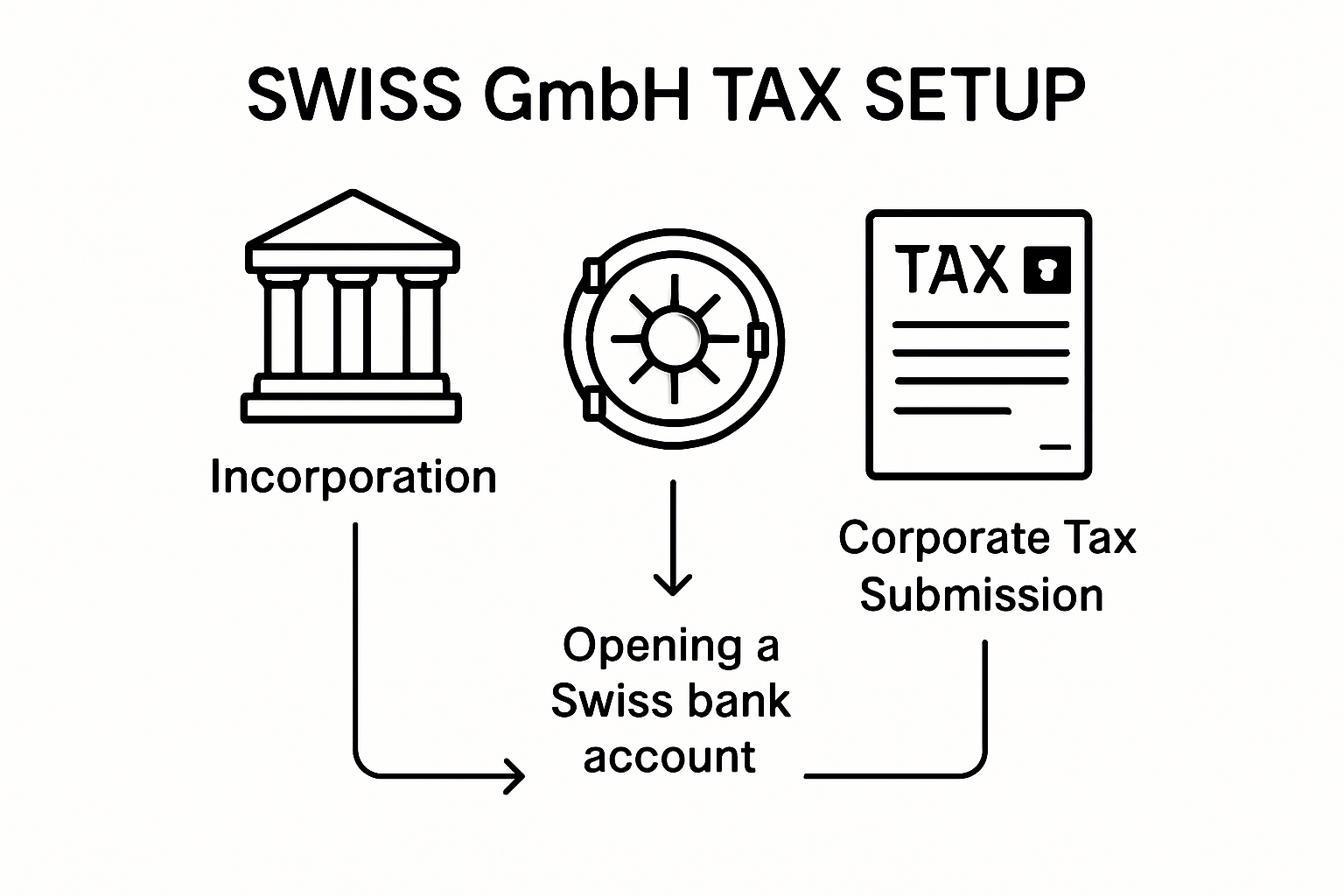
Initial capitalization represents a critical step in the financial setup process. Businesses must deposit the minimum share capital of 20,000 Swiss francs into a dedicated capital contribution account, which remains frozen during the initial formation period. Swiss banking regulations require precise management of these initial funds, with specific protocols governing how and when these funds can be accessed after successful company registration.
Key financial considerations for a Swiss GmbH include:
Mandatory registration for tax identification
Minimum capital requirement of 20,000 Swiss francs
Comprehensive accounting documentation
Professional accounting services recommended
Compliance with Swiss Code of Obligations financial reporting standards
Taxation for a Swiss GmbH offers competitive advantages, with relatively moderate corporate tax rates that can range between 8.5% and 22% depending on the canton. The Swiss tax system provides numerous incentives for businesses, including potential tax deductions for research and development, strategic investments, and international operations. Entrepreneurs must work closely with local tax professionals to optimize their tax strategy, ensuring full compliance while maximizing potential financial benefits in Switzerland’s sophisticated corporate tax environment.
Compliance Obligations and Common Pitfalls
Navigating the complex compliance landscape of Swiss GmbH formation requires precision, strategic planning, and comprehensive understanding of regulatory requirements. International entrepreneurs must remain vigilant about the numerous legal and administrative obligations that accompany business establishment in Switzerland. To officially register a company, entrepreneurs must meticulously draw up a foundation agreement, define precise articles of association, submit a comprehensive commercial register application, and apply for tax registration.
Common pitfalls in Swiss GmbH formation often stem from inadequate preparation and incomplete documentation. Many international businesses underestimate the complexity of Swiss regulatory requirements, leading to potential delays or registration complications. Entrepreneurs frequently make critical errors such as insufficient initial capitalization, incomplete shareholder documentation, or failure to maintain proper accounting records. These mistakes can result in significant administrative penalties, potential legal challenges, or even company deregistration.
Key compliance obligations and potential risks include:
Precise documentation of shareholder agreements
Accurate and timely tax reporting
Maintenance of comprehensive financial records
Adherence to Swiss Code of Obligations
Regular statutory reporting and declarations
Compliance with cantonal and federal regulations
Successful navigation of Swiss corporate compliance demands proactive management and professional guidance. Entrepreneurs should consider engaging local legal and financial experts who understand the nuanced regulatory environment. Investing in professional advisory services can help mitigate risks, ensure regulatory alignment, and provide strategic insights into Switzerland’s complex corporate governance framework. The cost of professional support is minimal compared to the potential financial and legal consequences of non-compliance in this highly regulated business ecosystem.
Simplify Your Swiss GmbH Formation Journey Today
Forming a Swiss GmbH involves navigating complex legal steps, securing capital, and ensuring compliance with Swiss regulations. If you are an international entrepreneur seeking clear guidance on drafting foundation agreements, meeting capital requirements, or managing shareholder liability, you are not alone. The challenges of documentation, registration, and financial setup can feel overwhelming without local expertise and comprehensive support. That is why leveraging professional assistance can transform your company formation experience from a frustrating process into a smooth, confident launch.
Discover how RPCS can help you establish your Swiss GmbH efficiently and legally. From preparing all necessary legal documents to facilitating banking setup and ongoing compliance services, our experts specialize in turning your business goals into reality while protecting your interests. Visit Swiss Incorporation Timeline Guide and our Company Formation Checklist to explore streamlined solutions tailored for international entrepreneurs. Do not let regulatory complexity hold you back—start your Swiss GmbH formation with trusted professionals today at rpcs.ch and gain the confidence to thrive in Switzerland’s stable and attractive business environment.
Frequently Asked Questions
What is a Swiss GmbH?
A Swiss GmbH, or Gesellschaft mit beschränkter Haftung, is a limited liability company that provides legal protection for shareholders by limiting their financial risk to their initial capital contributions.
What are the legal prerequisites for forming a Swiss GmbH?
To form a Swiss GmbH, founders must prepare a foundation agreement, draft articles of association, demonstrate a minimum capital of 20,000 Swiss francs, and register the company with the Swiss Commercial Registry, among other requirements.
What are the advantages of choosing a Swiss GmbH structure?
A Swiss GmbH offers limited liability for shareholders, flexibility in ownership and management, and a streamlined registration process, making it an attractive option for both local and international entrepreneurs.
What are the common compliance obligations for a Swiss GmbH?
Key compliance obligations for a Swiss GmbH include maintaining accurate financial records, timely tax reporting, adherence to the Swiss Code of Obligations, and regular statutory reporting to ensure regulatory alignment.
Recommended
Comments