
Step-by-Step Guide to Swiss Corporate Tax Registration
- Dec 22, 2025
- 8 min read
Updated: Dec 23, 2025

For many American entrepreneurs aiming to expand abroad, setting up a company in Switzerland often feels like navigating a maze of paperwork and regulations. With over 60 percent of cross-border business registrations experiencing delays due to incomplete documentation, careful preparation is essential. Knowing exactly which personal and corporate documents to gather, and understanding key Swiss requirements, can save time and prevent costly mistakes as you launch your new venture.
Table of Contents
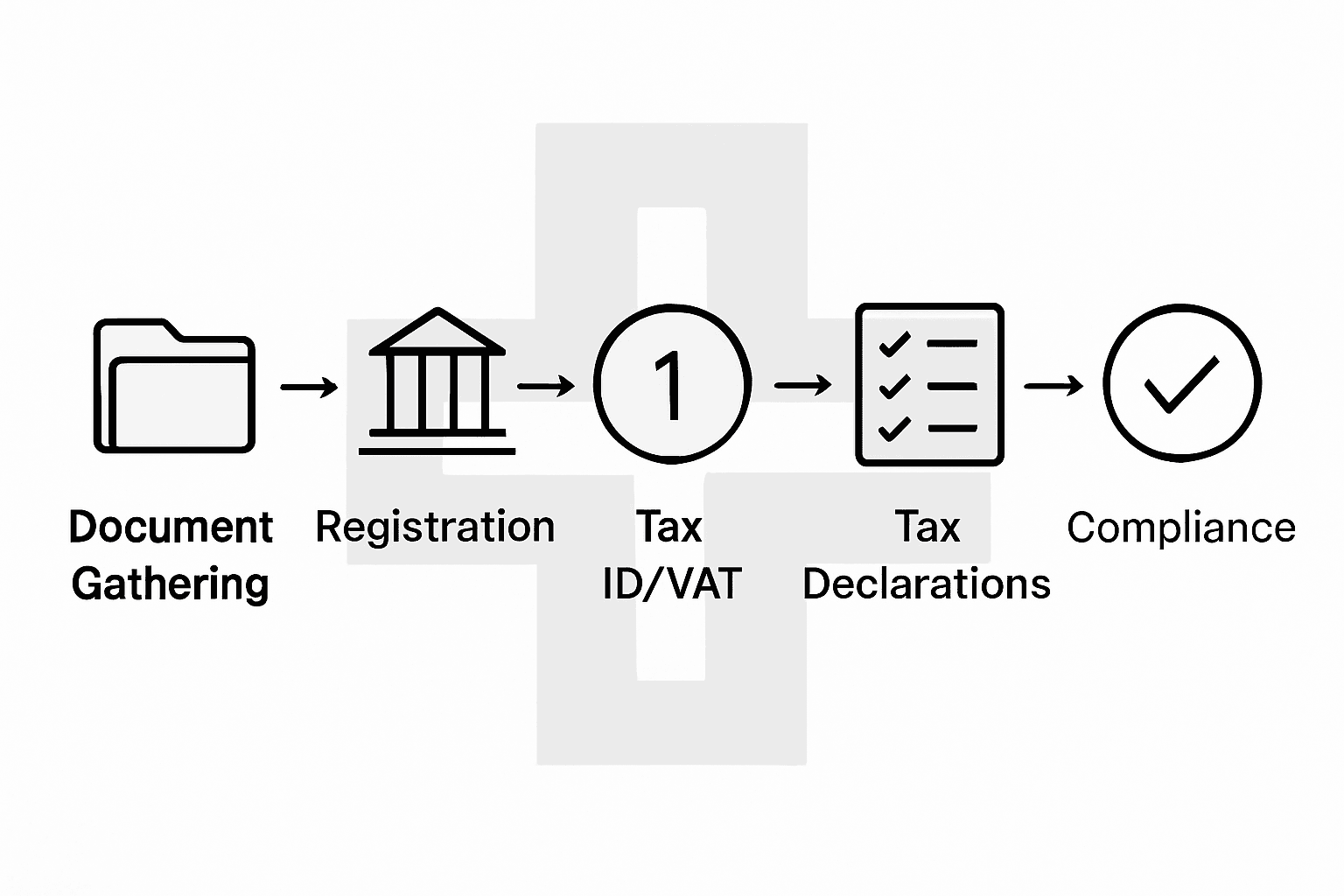
Quick Summary
Key Message | Explanation |
1. Collect Required Documentation | Gather personal IDs and corporate documents to facilitate business registration in Switzerland. |
2. Register with the Commercial Register | Submit necessary forms and fees to obtain an official company registration certificate. |
3. Obtain Tax Identification Numbers | Register for tax and VAT numbers with detailed business information within 30 days of liability. |
4. Submit Initial Tax Declarations | File comprehensive reports detailing business activities and projected financial performance promptly. |
5. Ensure Ongoing Compliance | Maintain accurate financial records and schedule regular reviews to meet Swiss tax regulations. |
Step 1: Gather Required Corporate and Personal Documents
When establishing a Swiss corporate entity, collecting the right documentation is your crucial first milestone. The Swiss Federal Tax Administration requires comprehensive paperwork to validate your business registration process.
Your document collection should include personal identification materials for all corporate directors and shareholders. This typically encompasses valid passports, proof of residential address, and professional background documentation. For the corporate side, prepare your company’s articles of association, detailed business plan, proof of initial capital investment, and a comprehensive description of your planned entrepreneurial activities. Specific requirements include your business’s registered office details, legal structure, projected first year turnover, and precise information about the type of commercial activities you will conduct in Switzerland.
Careful preparation of these documents minimizes potential registration delays. Organize your paperwork chronologically and ensure all documents are current translations if not originally in English or German. Each document should be clear, legible, and accurately represent your business’s operational intent.
Pro tip: Create a digital and physical backup of all documents. Scanning high quality color copies and storing them securely can save significant time if originals are misplaced during the registration process.
Step 2: Register Company with Swiss Commercial Register
Registering your company with the Swiss Commercial Register is a critical legal step that officially establishes your business entity. When preparing for registration, you should understand that your VAT number application becomes valid only after commercial register registration.

The registration process requires comprehensive documentation including your company’s articles of association, proof of initial capital, identification documents for all shareholders and directors, and a detailed business plan. You will need to submit these materials to the local commercial register office in the canton where your business will be headquartered. Each canton has specific requirements and processing timelines, so research the exact procedures for your chosen location. Typically, the registration involves paying a registration fee, submitting official forms, and providing notarized documents that validate your company’s legal structure and operational intent.
After submission, the commercial register will review your application thoroughly. This review process can take several weeks, during which they may request additional clarification or documentation. Once approved, you will receive an official registration certificate that confirms your company’s legal status and allows you to commence business operations.
Pro tip: Schedule a preliminary consultation with a local commercial register office to confirm all current documentation requirements and potential canton specific nuances before submitting your final application.
Step 3: Obtain Tax Identification and VAT Numbers
Obtaining your Swiss tax identification and VAT numbers is a crucial administrative step for establishing your business’s legal tax framework. According to the Federal Tax Administration regulations, businesses must register within 30 days of starting their tax liability.
The registration process requires comprehensive documentation including your business details such as registered office, legal form, business address, and projected first year turnover. You will need to provide detailed information about your entrepreneurial activities, including the exact start date of operations, closing date of your first business year, and a comprehensive forecast of your expected financial performance. Foreign businesses must also designate a local tax representative who will serve as the primary point of contact with Swiss tax authorities.
As part of the final VAT registration process, you must address a critical financial requirement: providing financial security to the Federal Tax Administration. This can be accomplished through a bank guarantee from a Swiss bank or by making a cash deposit that the tax authorities can access in case of payment defaults or insolvency. The entire process might seem complex, but careful preparation and attention to detail will help you navigate the Swiss tax registration efficiently.
Pro tip: Engage a local tax consultant who specializes in international business registration to help you accurately complete all documentation and understand the nuanced requirements of Swiss tax identification procedures.
Step 4: Submit Initial Tax Declarations and Forms
Submitting your initial tax declarations is a critical step in establishing your Swiss corporate tax compliance. According to Federal Tax Administration guidelines, businesses must file comprehensive documentation within 30 days of starting their tax liability.
Your tax declaration package must include a detailed breakdown of your business operations, including specific information about your entrepreneurial activities. This comprehensive submission requires precise financial reporting covering your registered office details, legal structure, business address, and a comprehensive forecast of your first 12 months of financial performance. For businesses with existing international operations, you will also need to provide worldwide turnover figures from the previous six business years. Each form must be completed with extreme accuracy to avoid potential delays or complications in your tax registration process.
The submission process involves multiple layers of documentation. You will need to compile financial statements, income records, expense reports, and supporting documentation that validates your business income and operational structure. Electronic submission is typically preferred, with online platforms providing secure channels for transmitting your sensitive financial information. Pay careful attention to each section of the declaration, ensuring that every field is filled out completely and accurately.
Pro tip: Create a comprehensive digital and physical file backup of all submitted tax documents, including timestamps and submission confirmations, to maintain a clear audit trail for potential future reference.
Step 5: Verify Compliance with Swiss Tax Authorities
Verifying your company’s compliance with Swiss tax authorities is a critical process that requires meticulous attention to detail and proactive documentation management. Understanding the Swiss tax benefit landscape can help streamline your compliance strategy.
The compliance verification process involves a comprehensive review of your financial records, tax declarations, and business operations. You will need to prepare detailed documentation demonstrating your adherence to Swiss tax regulations, including accurate income statements, expense records, VAT submissions, and a clear audit trail of all financial transactions. This typically involves working closely with a local tax consultant or certified accountant who understands the nuanced requirements of Swiss corporate tax law. They can help you navigate potential complexities and ensure that every aspect of your financial reporting meets the stringent standards set by Swiss tax authorities.
Prepare for potential tax authority audits by maintaining impeccable records and being transparent about your business operations. This means keeping digital and physical copies of all financial documentation, maintaining clear communication channels with tax representatives, and promptly responding to any requests for additional information. Regular internal audits and proactive compliance checks can help you identify and address potential issues before they become problematic.
Pro tip: Schedule quarterly internal compliance reviews with a tax professional to stay ahead of potential regulatory changes and maintain continuous alignment with Swiss tax requirements.
This table compares common Swiss business registration challenges with actionable solutions:
Challenge | Solution | Benefit |
Delayed document approval | Prepare translations and backups | Reduces registration timeline |
Unclear canton requirements | Consult local offices in advance | Avoids last-minute application issues |
VAT/Tax registration errors | Hire specialized local consultant | Ensures accurate submissions |
Risk of audit complications | Maintain digital and physical records | Supports audit readiness |
Here is a summary of the main steps and their administrative focus:
Step | Administrative Focus | Key Outcome |
1. Document Gathering | Collect corporate and personal documents | Ensures legal eligibility for registration |
2. Commercial Register | Submit forms and pay fees | Official registration certificate issued |
3. Tax & VAT Numbers | Register with tax authorities, provide business data | Tax and VAT numbers assigned |
4. Tax Declarations | File initial business activity reports | Meets compliance for first year operations |
5. Compliance Check | Maintain accurate financial documentation | Verified adherence to Swiss regulations |
Simplify Your Swiss Corporate Tax Registration Today
Navigating the complexities of Swiss corporate tax registration demands precision, thorough documentation, and local expertise. From gathering personal and corporate documents to securing VAT numbers and ensuring ongoing compliance, these steps can quickly overwhelm international entrepreneurs. Common challenges include managing strict canton requirements, preparing extensive tax declarations, and satisfying financial security conditions. If you want to avoid delays and costly mistakes, professional support tailored to your unique business needs is essential.

At RPCS, we specialize in guiding foreign investors and entrepreneurs through each phase of Swiss company formation. Our expert team ensures your documentation is correctly prepared and submitted, assists in acquiring tax identification, and helps you maintain full compliance with Swiss tax authorities. With our confidential, rapid service and comprehensive range of legal and administrative solutions, you can confidently establish your GmbH or AG without the uncertainty of regulatory pitfalls. Start your seamless Swiss business journey now by visiting RPCS company formation services and transform complex tax registration into a stress-free experience.
Frequently Asked Questions
What documents do I need to register a Swiss corporate entity?
To register a Swiss corporate entity, you will need personal identification for all directors and shareholders, such as valid passports and proof of address, as well as corporate documents like articles of association and a detailed business plan. Collect these documents before starting your registration to ensure a smooth process.
How do I register my company with the Swiss Commercial Register?
To register your company, submit your articles of association, proof of initial capital, and identification documents to the local commercial register office in your chosen canton. Be sure to verify any specific requirements related to your business’s legal form to avoid delays.
What is the timeline for obtaining tax and VAT numbers in Switzerland?
You must register for tax and VAT numbers within 30 days of starting your tax liability. Ensure you compile all necessary business details accurately, including your projected turnover, to facilitate a swift registration process.
How do I submit my initial tax declarations in Switzerland?
To submit your initial tax declarations, compile detailed financial records and a breakdown of your business operations. File these documents electronically within 30 days of your tax liability start date to comply with Swiss regulations.
What steps should I take to verify compliance with Swiss tax authorities?
To verify compliance, maintain accurate financial records and documentation of your tax submissions. Schedule quarterly internal compliance reviews with a tax professional to ensure you are aligned with Swiss tax requirements and ready for any potential audits.
Recommended
Comments